

A roof leak rarely starts as a disaster. It starts small. A missing shingle. A few hail impacts. A section of lifted flashing after a windstorm. Then life gets busy. Weeks pass. Sometimes months. Many homeowners assume they have plenty of time to deal with roof damage. Others want to wait until they get multiple contractor opinions. Some simply hope the problem is not serious enough to warrant an insurance claim.
Unfortunately, delaying action can be one of the most expensive decisions a property owner makes. When homeowners ask what happens if you delay a roof claim, the answer often includes denied coverage, reduced settlements, mounting repair costs, and disputes that become much harder to resolve over time. The reality is simple. Insurance companies expect policyholders to report damage promptly. The longer a claim sits unreported, the more complicated the process becomes. Let’s look at exactly why timing matters and what can happen when roof damage is left unresolved.
Why Homeowners Delay Roof Insurance Claims
Most delays are not intentional. In many cases, homeowners genuinely believe they are making a reasonable decision.
Common reasons include:
- Uncertainty about whether damage exists
- Concerns about insurance premiums
- Lack of visible interior leaks
- Busy schedules
- Waiting for contractor availability
- Assuming the damage is cosmetic
- Believing the storm was not severe enough
These reasons are understandable. However, insurance policies operate on timelines that do not always align with a homeowner’s personal schedule. A roof may appear stable today while hidden damage continues to worsen beneath the surface. By the time visible symptoms emerge, the claim process can become significantly more challenging.
Insurance Policies Often Require Prompt Reporting
Most insurance policies contain language requiring policyholders to provide notice of a loss within a reasonable timeframe. The exact wording varies. The concept does not. Insurance companies want an opportunity to inspect damage before evidence changes or disappears. When a claim is filed quickly, adjusters can often connect the damage to a specific weather event. Storm data, photographs, contractor reports, and physical evidence are easier to verify.
When months pass, questions begin to emerge. Was the damage caused by the reported storm? Did another weather event occur afterward? Has deterioration altered the condition of the roof? Could maintenance issues be involved? These questions create uncertainty. And uncertainty often benefits the insurance carrier rather than the policyholder.
The Biggest Risk: Claim Denial
The most serious consequence of delaying a roof claim is the possibility of denial. Insurance companies investigate claims based on evidence. Evidence becomes weaker over time.
Imagine two scenarios. In the first scenario, a homeowner reports hail damage within days of a storm. Photographs exist. Contractors inspect immediately. Weather reports clearly document hail activity. The evidence is strong. In the second scenario, the homeowner waits ten months.
During that period:
- Additional storms occur
- Roofing materials continue aging
- Repairs may have been attempted
- New damage may overlap existing damage
The insurer now faces a much more complicated investigation. The result? The claim may be questioned, reduced, or denied entirely. Even when coverage exists, delays create obstacles that would never have existed if the claim had been reported promptly.
How Insurance Companies View Delayed Claims
Insurance carriers often approach delayed claims differently than recently reported losses. Their reasoning is straightforward.
The longer the delay, the harder it becomes to determine:
- Cause of damage
- Date of loss
- Extent of original damage
- Whether additional damage developed afterward
From an insurance perspective, time creates uncertainty. Uncertainty creates risk. Risk leads to greater scrutiny. That scrutiny frequently results in more requests for documentation, additional inspections, engineering reports, and prolonged negotiations. Homeowners who expected a straightforward process suddenly find themselves defending the validity of their claim.
Evidence Disappears Faster Than Most People Realize
Roof damage changes over time. That fact alone makes delayed claims difficult. Wind damage may loosen shingles that later detach completely. Hail impacts become less obvious after prolonged exposure. Water stains may spread or dry out. Metal components oxidize. Sealants deteriorate. Physical evidence rarely remains frozen in time. This is why immediate documentation is so important.
When roof damage is discovered, property owners should gather:
- Wide-angle roof photographs
- Close-up damage photos
- Interior damage images
- Videos showing affected areas
- Contractor inspection reports
- Weather event information
These records create a timeline. Without that timeline, proving damage becomes significantly more difficult.
Weather Data Is Helpful—but Not Enough
Many homeowners believe weather records alone can support a delayed claim. Sometimes they help. They rarely solve the entire problem. Insurance companies generally want more than evidence that a storm occurred. They want evidence showing the storm caused the damage being claimed. A report confirming hail in the area does not automatically prove hail damaged a specific roof. Direct physical evidence remains essential. The longer a homeowner waits, the less physical evidence remains available for evaluation. This creates a gap between the weather event and the property condition. That gap can become a major issue during claim review.
Small Roof Problems Become Big Repair Bills
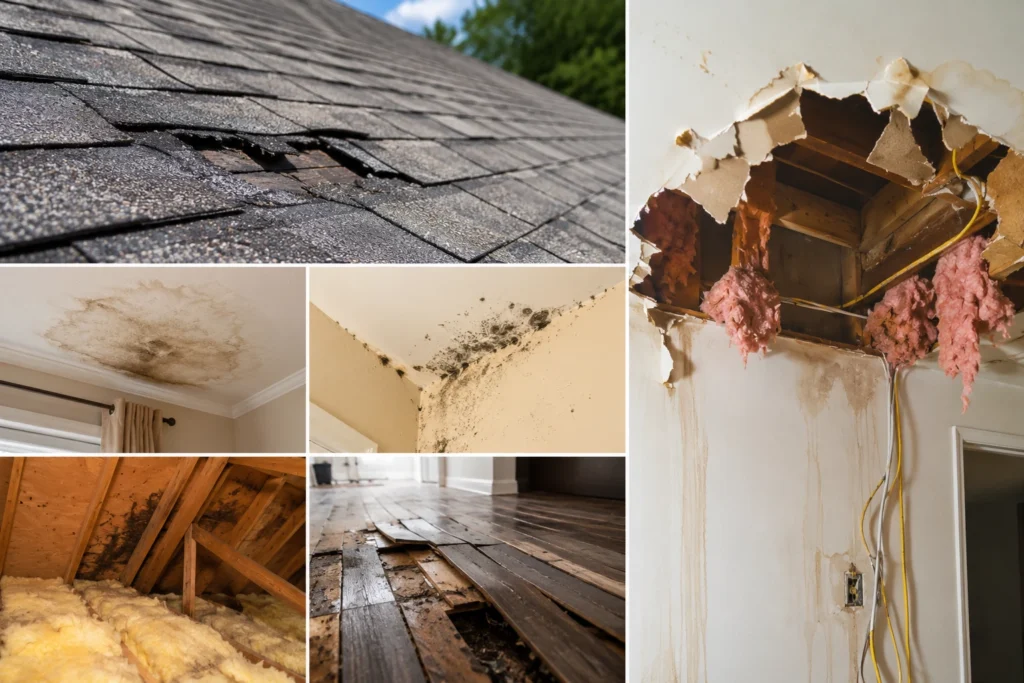
One of the most expensive consequences of waiting is secondary damage.Roof systems exist to keep water outside. When damage compromises that system, moisture begins finding new pathways. Initially, the effects may seem minor. Then they spread.
A tiny opening can allow water intrusion into:
- Roof decking
- Attic insulation
- Drywall
- Electrical systems
- Flooring materials
- Interior finishes
The repair bill grows accordingly.
Consider this comparison:
| Initial Damage | Potential Result After Delay |
| Missing shingles | Deck rot |
| Damaged flashing | Ceiling leaks |
| Small puncture | Mold growth |
| Hail impacts | Full roof replacement |
| Minor water intrusion | Structural repairs |
The original roof damage may have been manageable. The secondary damage often is not.
Mold and Moisture Problems Escalate Quickly
Water rarely stays where it enters. That is one of the most misunderstood aspects of roof damage. Moisture travels. It moves through insulation. It follows framing members. It spreads across ceilings. It reaches areas homeowners never suspect. Over time, damp conditions create an environment where mold can develop. Once mold becomes involved, restoration costs increase substantially.
The project may require:
- Moisture mapping
- Material removal
- Air quality testing
- Containment procedures
- Specialized remediation
At that stage, what started as a roofing issue becomes a much larger property restoration project. The cost difference can be significant.
Insurance Companies May Attribute Damage to Neglect
This is where delayed claims often become especially frustrating. Homeowners frequently believe they are being responsible by waiting. Insurance companies may view the situation differently. Policies generally require homeowners to take reasonable steps to prevent further damage. This obligation is known as mitigation.
If damage worsens because necessary action was delayed, insurers may argue that some portion of the loss resulted from neglect rather than the original covered event. That distinction matters. Covered storm damage and preventable deterioration are treated differently under most policies. A homeowner may receive compensation for the original damage while being denied coverage for portions attributed to delayed action. That can leave thousands of dollars in uncovered expenses.
Wear and Tear Becomes a Bigger Issue
As roofs age, distinguishing storm damage from normal aging becomes increasingly difficult. This challenge grows over time. An adjuster inspecting damage shortly after a storm can usually identify fresh impacts and recent failures. Months later, natural aging processes may obscure those indicators.
Insurers may argue that:
- Material deterioration existed before the storm
- Damage resulted from age
- Maintenance issues contributed to failure
- Roof condition predated the reported event
Whether those conclusions are accurate or not, delayed reporting often makes disputes more likely. The homeowner faces a steeper burden of proof.
Settlement Amounts May Be Lower
Even when delayed claims remain covered, settlement values can suffer. Why? Because evidence supports value. Strong documentation helps demonstrate the full scope of damage. Weak documentation often results in conservative estimates. When adjusters cannot clearly verify every damaged component, they may limit the scope of repairs included in their estimate.
That can affect:
- Roofing materials
- Flashing systems
- Vent components
- Gutters
- Interior repairs
- Code-required upgrades
The result is a smaller settlement. Not necessarily because the damage is absent. Because proving it became more difficult.
What Insurance Adjusters Miss on Roof Claims
One issue that surprises many homeowners is that some forms of damage are not immediately obvious during an inspection. Subtle hail impacts, damaged soft metals, compromised flashing systems, moisture intrusion behind walls, and code-related upgrade requirements can sometimes go unnoticed during the initial evaluation. When a claim is delayed, these hidden issues become even harder to identify and document, which may further complicate settlement negotiations and coverage discussions.
The Financial Cost of Waiting
A delayed roof claim often creates expenses beyond the insurance process itself.
Homeowners may face:
- Emergency tarping costs
- Water extraction expenses
- Temporary repairs
- Mold remediation
- Interior reconstruction
- Personal property replacement
Many of these expenses grow larger with time. The difference between a prompt claim and a delayed claim can easily reach thousands of dollars. Sometimes much more.
Even sophisticated fields like Topological Data Analysis rely heavily on preserving accurate information over time. Insurance claims operate on a similar principle. The more complete and immediate the documentation, the stronger the overall picture becomes.
What To Do Immediately After Discovering Roof Damage
When roof damage is suspected, speed matters. That does not mean rushing blindly. It means acting deliberately and documenting thoroughly.
Start with these steps:
1. Photograph Everything
Take wide shots and close-ups. Capture every visible area of concern. Document interior damage as well.
2. Prevent Further Damage
Temporary repairs can help prevent worsening conditions.
Examples include:
- Emergency tarping
- Water diversion
- Protecting interior contents
Always prioritize safety.
3. Notify Your Insurance Company
Once damage has been identified, report the claim as soon as possible.
Provide basic information about:
- The date damage was discovered
- The suspected cause
- The areas affected
- Any emergency mitigation completed
Keep detailed records of every conversation. Save emails, claim numbers, inspection schedules, and written correspondence. Organized documentation can become invaluable if questions arise later.
4. Schedule a Professional Inspection
A qualified roofing professional can help identify damage that may not be visible from the ground.
Professional inspections often uncover:
- Hidden hail impacts
- Lifted shingles
- Damaged flashing
- Ventilation issues
- Water intrusion points
A thorough inspection creates an additional layer of documentation that may support the claim process.
Why Waiting Can Turn a Simple Claim Into a Complex Dispute
Most roof claims start with a relatively straightforward question: “What damage did the storm cause?” When a homeowner reports the loss quickly, answering that question is often manageable. When months pass, additional questions emerge.
Now the discussion becomes:
- Did multiple storms contribute?
- Did maintenance issues play a role?
- Did the homeowner take reasonable mitigation steps?
- Has the damage changed since the original event?
- Is all observed damage related to the reported loss?
Every additional question introduces complexity. Complexity increases the likelihood of disagreements. Disagreements increase the likelihood of delays, supplemental claims, engineering reviews, and negotiations. A claim that could have been resolved in weeks may take months to settle.
Understanding the Duty to Mitigate
One of the most important responsibilities homeowners have after discovering roof damage is mitigation. Mitigation simply means taking reasonable steps to prevent additional damage. This does not mean performing permanent repairs before the insurance company inspects the property. It means acting responsibly.
Examples include:
- Installing temporary tarps
- Covering exposed openings
- Removing standing water
- Protecting personal property
- Addressing active leaks
Insurance carriers generally expect policyholders to minimize avoidable damage. Failing to do so can create coverage complications later.
If a small leak is allowed to continue for months without action, the insurer may argue that some resulting damage could have been prevented. That argument can impact portions of the settlement.
Delayed Claims Can Create Contractor Challenges
Roofing contractors often encounter difficulties when evaluating older storm damage.
The passage of time affects their ability to determine:
- The extent of original damage
- The age of visible impacts
- Whether repairs have been attempted
- How much deterioration occurred after the storm
This uncertainty can create differing opinions among contractors. One roofer may recommend repair. Another may recommend replacement. Insurance companies may rely on a third opinion. Suddenly, everyone is evaluating a roof that has changed significantly since the actual weather event occurred. The result is often disagreement. Prompt claims help reduce that uncertainty.
The Impact of Multiple Storm Seasons
This issue is especially important in Texas. A roof damaged during one storm season may experience additional weather events before the homeowner files a claim.
By the time an inspection occurs, the roof may have been exposed to:
- Additional hailstorms
- High winds
- Heavy rain
- Extreme heat
- Seasonal temperature fluctuations
Insurance carriers may question which event caused which damage. That becomes a difficult conversation when the original condition was never documented. The more storms that occur after the initial damage, the harder it becomes to isolate the loss. This is one reason experienced claim professionals consistently encourage prompt reporting.
Why Documentation Often Determines Claim Success
Many homeowners focus entirely on the visible damage. Documentation deserves equal attention. Insurance claims are built on evidence.
Strong documentation often includes:
| Documentation Type | Purpose |
| Photographs | Visual proof of damage |
| Videos | Condition documentation |
| Inspection Reports | Professional evaluation |
| Weather Records | Event verification |
| Repair Invoices | Mitigation evidence |
| Communication Logs | Claim timeline support |
Think of documentation as the foundation of the claim. Without it, even legitimate damage can become difficult to prove. With it, negotiations become more objective.
The Hidden Cost of Stress
Most discussions about delayed roof claims focus on money. The emotional cost deserves attention too. Property damage creates uncertainty.
Homeowners worry about:
- Additional leaks
- Rising repair costs
- Insurance disputes
- Family safety
- Property value
When claims are delayed, that uncertainty often lasts longer. Instead of moving toward resolution, homeowners remain stuck in a cycle of unanswered questions. The issue hangs over every rainstorm.
Every new stain on the ceiling becomes another source of concern. Prompt action does not eliminate stress entirely. It does help move the process forward. And forward progress matters.
Why Public Adjusters Become Important in Delayed Claims
Delayed roof claims frequently involve additional scrutiny from insurance carriers. This is where professional claim representation can become valuable. A public adjuster works on behalf of the policyholder rather than the insurance company.
Their role may include:
- Reviewing policy language
- Evaluating damage
- Organizing documentation
- Preparing claim presentations
- Negotiating settlements
- Responding to carrier requests
For delayed claims, documentation often becomes the central issue. A public adjuster can help assemble evidence that supports the timeline and scope of loss.
This may include:
- Historical weather reports
- Contractor inspections
- Photographic evidence
- Repair records
- Property condition documentation
The goal is to strengthen the claim narrative with facts.
Investigating Older Storm Damage
Older roof claims require a different approach. Instead of relying solely on fresh physical evidence, investigators may need to reconstruct the timeline.
This can involve reviewing:
- Local storm history
- Roofing material condition
- Prior inspection reports
- Maintenance records
- Satellite imagery
- Contractor documentation
The process becomes more detailed. That is why delayed claims often require more effort than claims reported immediately after a storm. The evidence still exists in many cases. Finding and organizing it simply takes more work.
Special Considerations for Homeowners in Addison
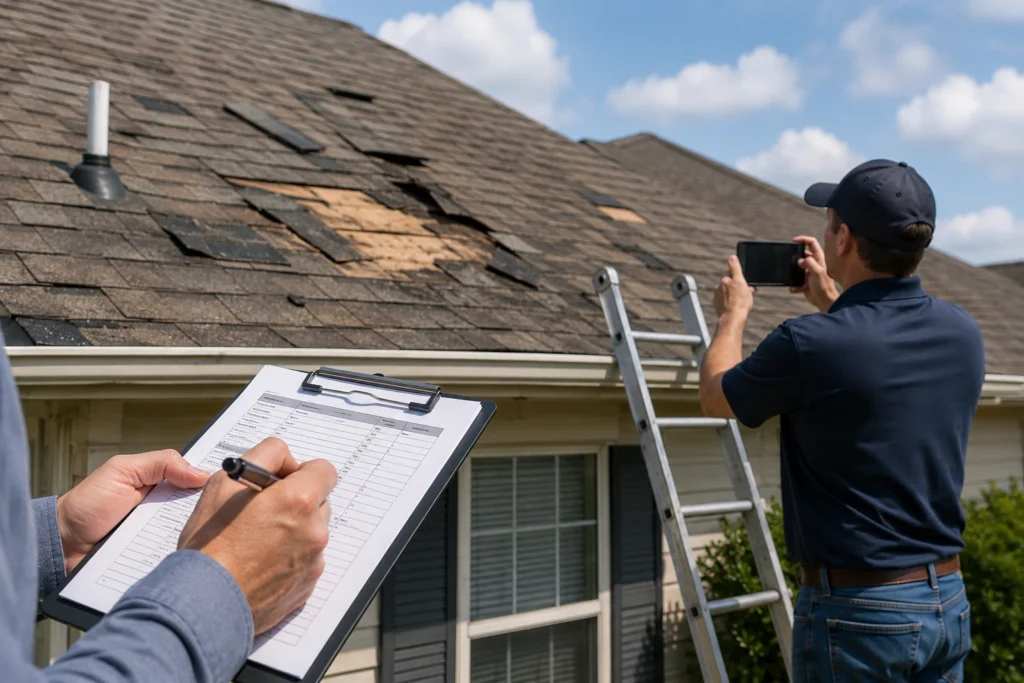
Property owners in Addison face weather conditions that can be particularly challenging for roofing systems. Hail, wind, heavy rain, and severe thunderstorms can all contribute to roof damage. Unfortunately, some homeowners in Addison do not realize their roof was damaged until months after a storm event. The damage may not be visible from the ground.
There may be no immediate leak. Everything appears normal. Then the signs begin to emerge. Water stains. Missing shingles. Interior moisture. At that point, the homeowner may discover the damage has existed far longer than expected. For homeowners in Addison, prompt inspections following major weather events can help identify problems before they become expensive claim disputes.
Routine roof evaluations are especially valuable after severe storms. They create documentation that may become important if a claim is needed later. Another challenge in Addison is that rapidly changing weather conditions can expose already damaged roofing materials to additional stress. A roof weakened by hail may suffer further deterioration during subsequent wind events, making it harder to determine the full scope of the original loss if reporting is delayed. This is why homeowners in Addison should treat potential roof damage seriously from the beginning rather than adopting a wait-and-see approach.
Common Signs You Should Not Ignore
Many homeowners delay claims because they assume damage is minor. Certain warning signs should never be overlooked.
Watch for:
- Missing shingles
- Granules accumulating in gutters
- Water stains on ceilings
- Damp attic insulation
- Sagging roof sections
- Visible hail impacts
- Damaged flashing
- Dripping water during storms
- Moldy odors
- Increased energy bills
Any of these symptoms may indicate underlying roof damage. The sooner they are investigated, the better.
When Delaying Might Be Reasonable
Not every roofing issue requires an immediate insurance claim. Some situations may warrant further evaluation first.
For example:
- Minor maintenance concerns
- Age-related deterioration
- Cosmetic issues without storm involvement
- Small repairs below deductible amounts
However, homeowners should still document the condition and obtain professional opinions. The key difference is gathering information promptly rather than ignoring the issue altogether. Waiting to investigate is very different from investigating and then making an informed decision.
Protecting Your Rights Before Problems Escalate
The best roof claims share a common characteristic. The homeowner acted quickly. They documented damage. They preserved evidence. They communicated promptly. They addressed active leaks. They maintained records. These actions strengthen the claim from the beginning. They also reduce opportunities for disputes later. The longer damage remains undocumented, the more opportunities exist for evidence to disappear, conditions to change, and questions to arise. Insurance claims become more difficult when the facts become less clear.
Final Thoughts
So, what happens if you delay a roof claim? The answer depends on the circumstances, but the risks are significant. Delays can lead to claim denials, reduced settlements, evidence challenges, secondary damage, increased repair costs, and prolonged disputes with insurance carriers. What starts as a relatively manageable roofing issue can evolve into a much larger financial problem. The good news is that many of these complications are avoidable.
Prompt reporting, thorough documentation, professional inspections, and proactive mitigation efforts can dramatically improve the outcome of a roof claim. When storm damage is suspected, time is one of the most valuable assets a homeowner has. Use it wisely. The sooner damage is documented and addressed, the greater the likelihood of preserving coverage, protecting property value, and securing a fair settlement. Whether the property is located in Addison or elsewhere in Texas, acting quickly is almost always the smartest move.
FAQs
The timeframe varies by policy, but most insurers expect claims to be reported promptly after damage is discovered. Waiting too long can create coverage issues or lead to denial.
Yes. If the delay makes it difficult to verify the cause, date, or extent of damage, the insurance company may deny the claim.
Additional damage may occur, including leaks, mold, and structural issues. Insurance companies may not cover damage they believe could have been prevented.
Insurers often use inspections, weather data, and expert evaluations to estimate when damage occurred. Delayed reporting can make this determination more difficult.
You should take reasonable steps to prevent further damage, such as temporary tarping, but major repairs should generally wait until the insurer has inspected the property.
In some cases, yes. However, the longer you wait, the harder it may be to prove the storm caused the damage.
Take photographs, videos, inspection reports, repair receipts, and notes about the damage. Thorough documentation can strengthen your claim.
No. Some delayed claims are still approved, but they often face more scrutiny and require stronger supporting documentation.
Yes. A public adjuster can gather evidence, review policy language, document damages, and negotiate with the insurance company on your behalf.
The biggest risk is losing the ability to clearly prove the cause and extent of damage, which can result in a reduced settlement or claim denial.