
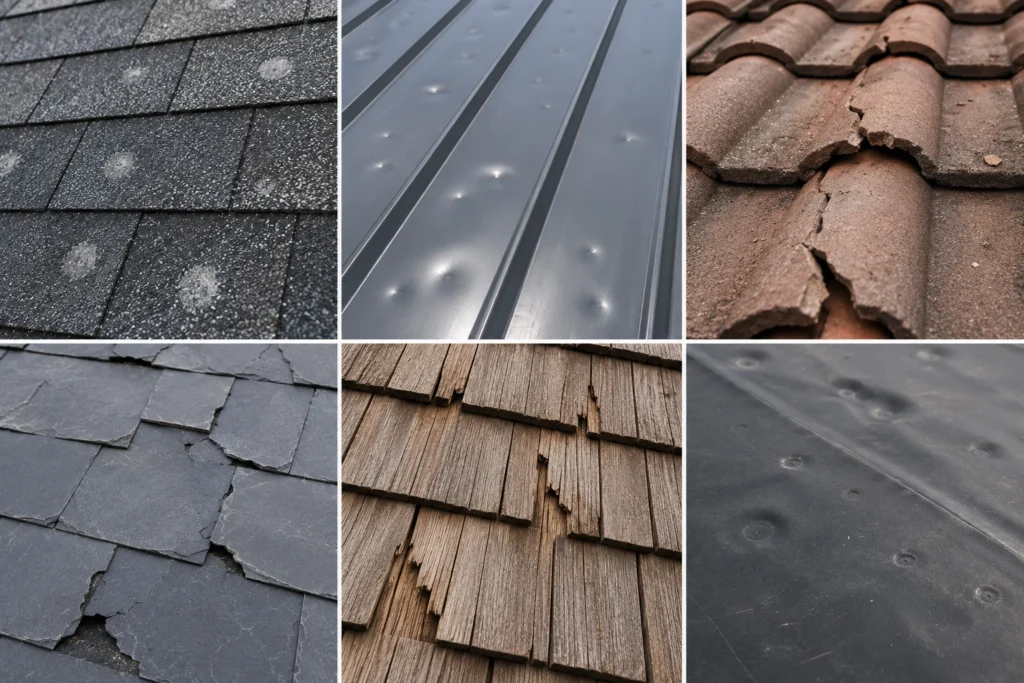
Hailstorms can leave behind more than a few dents in your gutters. They can create hidden roof damage that remains unnoticed for months or even years. That’s why understanding how to identify hail damage by roof type is one of the most important skills a property owner can develop after a severe storm. The challenge is simple. Not all roofs react to hail the same way. A baseball-sized hailstone that severely damages an asphalt shingle roof may leave only cosmetic dents on a metal roof. Meanwhile, tile, slate, and wood roofing systems can develop fractures that are difficult to spot from the ground. I’ve seen many property owners assume their roof survived a storm simply because they didn’t find an immediate leak. Unfortunately, water intrusion is often the final symptom, not the first.
This guide explains exactly how to identify hail damage by roof type, what signs to look for, and how to avoid costly mistakes during the inspection process. Understanding How Hail Damages Roofing Systems Before examining individual roof materials, it helps to understand what actually happens during a hailstorm. Hail forms when strong thunderstorm updrafts carry water droplets into extremely cold areas of the atmosphere. As the droplets freeze and accumulate layers of ice, they eventually become too heavy and fall. The resulting impact can be significant. Even relatively small hailstones can strike a roof at speeds exceeding 50 miles per hour. Larger stones can generate enough force to crack, dent, split, or fracture roofing materials.
Several factors influence the severity of damage:
- Hail size
- Wind speed
- Roof age
- Roofing material
- Roof slope
- Storm duration
A newer roof may absorb impacts more effectively than an aging roof that has already experienced years of weather exposure. This distinction becomes important when evaluating insurance claims.
Functional Damage vs Cosmetic Damage
Not all hail damage affects roof performance. Functional damage occurs when the roof’s ability to shed water is compromised.
Examples include:
- Cracked shingles
- Broken tiles
- Punctured roofing membranes
- Fractured slate
- Exposed underlayment
Cosmetic damage affects appearance but may not immediately impact performance.
Examples include:
- Minor metal roof dents
- Surface discoloration
- Small blemishes
The difference often becomes the center of insurance disputes.
Why Roof Type Matters During Hail Inspections
Many homeowners search online for photos of hail damage and assume all roofs should look the same after a storm. They don’t. Different roofing materials respond differently to impact energy. Some bruise. Some crack. Some dent. Others may hide damage beneath the surface entirely.
That is why understanding how to identify hail damage by roof type requires a material-specific approach. A mistake here can lead to missed damage and underpaid insurance claims.
How to Identify Hail Damage on Asphalt Shingle Roofs
Asphalt shingles remain the most common roofing material in the United States. They are also among the easiest materials to damage during severe hailstorms.
Why Asphalt Shingles Are Vulnerable
Each shingle contains protective granules designed to shield the asphalt layer from ultraviolet radiation and weather exposure. When hail strikes, those granules can become dislodged. Once the granules disappear, the underlying asphalt becomes vulnerable to accelerated deterioration.
Common Signs of Hail Damage
Granule Loss
Granule loss is one of the most recognizable indicators.
Look for:
- Dark spots
- Exposed asphalt
- Random impact locations
- Fresh granule accumulation in gutters
Granule loss typically appears scattered rather than uniform. Normal aging creates gradual wear. Hail damage creates isolated impact zones.
Bruising
Bruising occurs when hail compresses the shingle surface. The damage may not be visible immediately. However, gentle pressure can reveal soft areas beneath the surface. These bruises weaken the shingle and shorten its lifespan.
Circular Impact Marks
Most hail impacts create rounded or irregular circles. The pattern often appears random across the roof slope. Consistent patterns usually indicate manufacturing issues rather than hail.
What Is Often Mistaken for Hail Damage?
Not every roof imperfection results from a storm. Common look-alikes include:
| Condition | Often Mistaken for Hail? |
| Blistering | Yes |
| Foot Traffic | Yes |
| Manufacturing Defects | Yes |
| Thermal Cracking | Yes |
| Age-Related Wear | Yes |
Proper identification is critical before filing a claim.
How to Identify Hail Damage on Metal Roofs
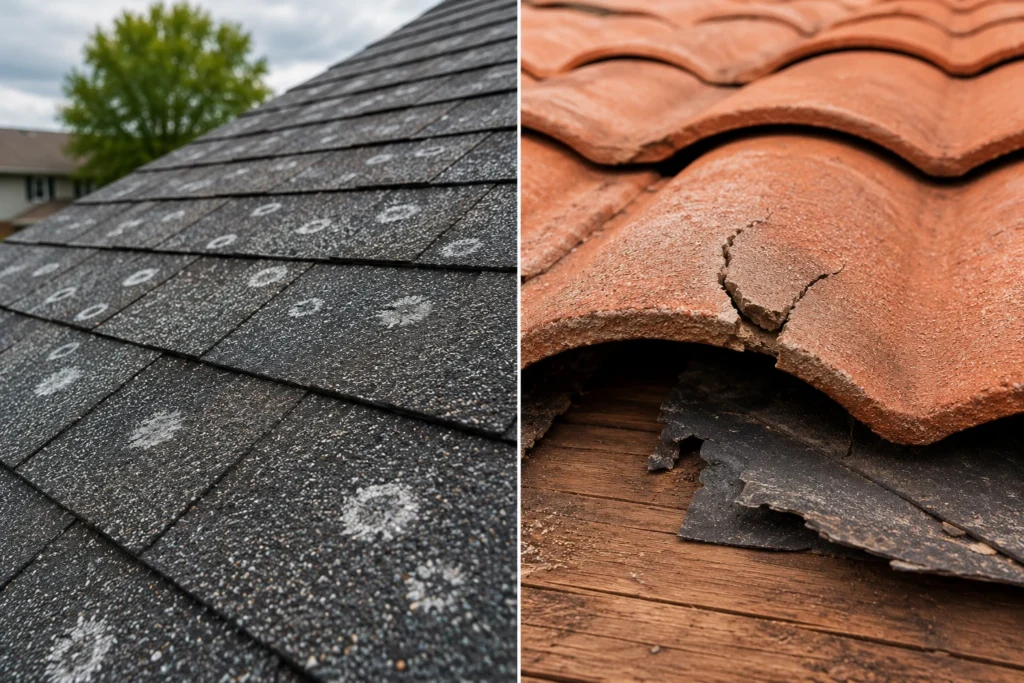
Metal roofs are known for durability. That doesn’t mean they’re immune to hail. In fact, large hailstones can leave visible evidence across entire roof sections.
What Hail Damage Looks Like on Metal Roofing
Unlike asphalt shingles, metal roofs rarely lose protective material. Instead, they deform.
Common indicators include:
- Dents
- Dings
- Surface depressions
- Coating damage
The size and depth of the dent often correlate with hail size.
Examine Roof Components Carefully
Pay close attention to:
- Ridge caps
- Flashing
- Standing seams
- Fasteners
- Roof penetrations
These areas often reveal damage before larger roof panels.
Cosmetic Versus Functional Damage
This distinction becomes especially important with metal roofs. Consider the following comparison:
| Cosmetic Damage | Functional Damage |
| Small dents | Punctures |
| Surface blemishes | Bent seams |
| Minor depressions | Water intrusion pathways |
| Paint imperfections | Panel displacement |
Insurance carriers sometimes argue that dents are purely cosmetic. However, repeated impacts can affect drainage and long-term performance.
How to Identify Hail Damage on Tile Roofs
Tile roofs are attractive, durable, and expensive. They are also highly susceptible to impact fractures.
Clay and Concrete Tiles React Differently
Clay tiles tend to crack sharply. Concrete tiles may chip or develop fractures. Both conditions require careful inspection. The challenge is that damage often appears subtle at first.
Signs of Tile Roof Hail Damage
Look for:
- Cracked surfaces
- Broken corners
- Missing fragments
- Chipped edges
- Impact craters
The damage may affect only a handful of tiles. Unfortunately, even isolated breaks can create pathways for water intrusion.
Hidden Damage Beneath Tiles
Surface damage is only part of the story.
A severe hailstorm can damage:
- Underlayment
- Fasteners
- Waterproof barriers
This hidden damage may remain undetected for months.
How to Identify Hail Damage on Slate Roofs
Slate is one of the most durable roofing materials available. Many slate roofs last over a century. However, durability does not equal invincibility. Large hail can fracture natural stone.
Common Indicators of Slate Damage
Inspect for:
- Broken slate pieces
- Corner fractures
- Surface spalling
- Missing sections
Some impacts create visible cracks immediately. Others develop into larger fractures over time.
Why Slate Inspections Are Challenging
Walking on slate can create additional damage. That is why professional inspections are often recommended. A trained inspector can identify impact patterns while minimizing the risk of causing new breaks.
Interestingly, the evaluation process can become surprisingly complex, almost resembling the study of epistemology, where determining the true source of damage requires careful examination of evidence rather than assumptions. For slate roofs especially, conclusions should always be based on documentation rather than visual impressions alone.
How to Identify Hail Damage on Wood Shake and Wood Shingle Roofs
Wood roofs present a unique challenge. Natural weathering already creates cracks, splits, and texture variations. Distinguishing hail damage requires attention to detail.
Fresh Splits Versus Old Splits
A fresh hail-induced split typically shows:
- Sharp edges
- Clean breaks
- Lighter wood coloration
Older weather-related splits usually appear darker and more worn. This difference can help establish whether damage resulted from a recent storm.
Impact Marks and Punctures
Large hailstones can create:
- Circular dents
- Surface gouges
- Compression marks
- Fiber separation
Because wood is a natural material, damage patterns may vary significantly from one section of the roof to another.
Areas Most Likely to Show Damage
Inspect:
- Ridge lines
- Exposed slopes
- South-facing roof sections
- Areas lacking tree cover
These locations often receive the greatest impact during severe hail events.
How to Identify Hail Damage on Synthetic and Composite Roofs
Synthetic roofing products continue gaining popularity because they mimic premium roofing materials while offering improved impact resistance. That doesn’t mean damage cannot occur.
Common Composite Roofing Materials
These include:
- Synthetic slate
- Polymer shake
- Composite shingles
- Rubber roofing products
Many manufacturers advertise impact resistance ratings. Those ratings help, but they do not eliminate risk.
Visible Signs of Hail Damage
Look for:
- Surface cracking
- Compression marks
- Material displacement
- Granule loss
- Edge fractures
Unlike traditional materials, synthetic products often hide damage beneath protective surface layers. Thorough inspections remain essential.
Understanding Impact Ratings
Many composite products receive Class 4 impact ratings. This represents the highest standard currently available. However, no rating guarantees immunity from every storm. Property owners in Addison frequently discover that even premium roofing materials can sustain damage during unusually severe hail events.
Collateral Damage: The Clues Many Homeowners Miss
Sometimes the roof is not the best place to start. The surrounding property often provides valuable evidence.
After a storm, inspect:
- Gutters
- Downspouts
- Window screens
- HVAC units
- Mailboxes
- Deck furniture
- Fencing
Collateral damage helps establish storm severity and impact direction.
Those details can strengthen future insurance documentation.
Functional Damage vs Cosmetic Damage
One of the most important concepts homeowners must understand after a hailstorm is the difference between cosmetic damage and functional damage. The distinction may sound simple. In reality, it often becomes one of the most heavily debated aspects of an insurance claim.
What Is Functional Damage?
Functional damage affects the roof’s ability to perform its intended purpose. In other words, the roof’s protective system has been compromised.
Examples include:
- Cracked shingles
- Fractured tiles
- Punctured metal panels
- Broken slate pieces
- Damaged waterproof barriers
- Exposed underlayment
These issues can eventually allow moisture to enter the structure. Even if leaks have not yet appeared, functional damage may already exist.
What Is Cosmetic Damage?
Cosmetic damage affects appearance without immediately reducing roof performance.
Examples often include:
- Minor metal roof dents
- Surface discoloration
- Small impact marks
- Shallow depressions
However, cosmetic damage is not always harmless. Repeated impacts can shorten the lifespan of roofing materials, affect resale value, and create future maintenance concerns. That is why a thorough inspection matters.
Why the Difference Matters During Claims
Insurance policies vary. Some policies provide coverage for cosmetic damage. Others specifically exclude it. The determination can significantly affect claim outcomes. For that reason, documentation becomes essential. The more evidence available, the easier it becomes to establish whether damage is merely aesthetic or genuinely functional.
Common Mistakes Homeowners Make After a Hailstorm
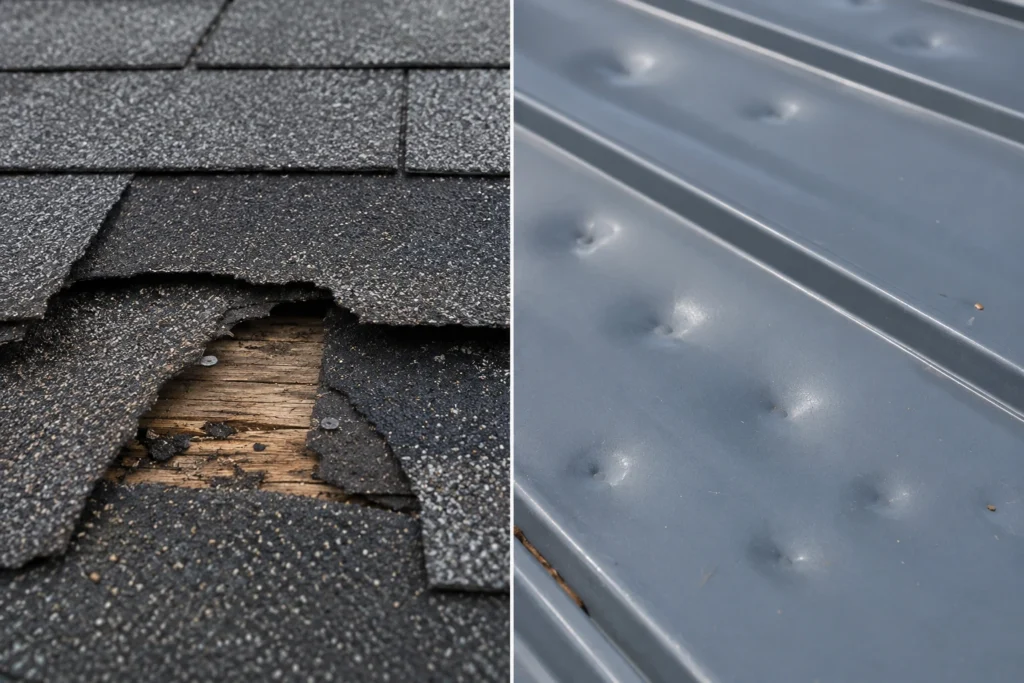
Many property owners unintentionally weaken their claim before the process even begins. The mistakes are understandable. Most people simply do not deal with hail damage often.
Waiting Too Long to Inspect
One of the most common errors is delaying an inspection. A roof may appear fine immediately after a storm. Months later, leaks begin to appear. Unfortunately, proving the damage originated from a specific hail event becomes more difficult as time passes. Schedule an inspection as soon as practical after a significant storm.
Assuming No Leak Means No Damage
This assumption costs homeowners thousands of dollars every year. Roof damage frequently develops long before water enters the structure. Cracked tiles. Bruised shingles. Compromised underlayment. These problems may exist for months before showing interior symptoms.
Looking Only From the Ground
Ground-level inspections have limitations. You may spot obvious damage. You may miss everything else. Many forms of hail damage require close examination from the roof surface itself.
Failing to Document the Storm
Photos matter. Videos matter. Weather reports matter. The strongest claims typically include documentation collected immediately after the event.
Why Collateral Damage Can Strengthen Your Assessment
Many roof inspections begin with the roof. Experienced inspectors often begin elsewhere. Collateral damage frequently provides valuable clues.
Examine Gutters Carefully
Gutters often reveal hail impacts clearly.
Look for:
- Fresh dents
- Paint damage
- Impact marks
- Granule accumulation
Metal gutters serve almost like a storm record. They can help verify hail size and direction.
Inspect HVAC Equipment
Outdoor air conditioning units are particularly useful indicators.
The aluminum fins often show:
- Dents
- Bent surfaces
- Impact patterns
These signs help establish storm severity.
Check Siding and Exterior Features
Inspect:
- Window screens
- Garage doors
- Fencing
- Deck railings
- Exterior lighting
The broader the damage pattern, the stronger the evidence that a significant hail event occurred.
When to Schedule a Professional Roof Inspection
Not every storm requires a full forensic evaluation. Some situations absolutely do.
Signs That Warrant Immediate Inspection
Consider scheduling an inspection if you observe:
- Large hailstones during the storm
- Dented gutters
- Damaged siding
- Broken windows
- Visible roof impacts
- Interior water stains
These warning signs often indicate roof damage exists somewhere on the property.
What Professional Inspections Typically Include
A comprehensive inspection may involve:
| Inspection Component | Purpose |
| Roof Surface Evaluation | Identify impact damage |
| Test Squares | Measure damage density |
| Photo Documentation | Create claim evidence |
| Material Assessment | Determine functional damage |
| Collateral Damage Review | Verify storm intensity |
| Moisture Evaluation | Identify hidden issues |
This level of detail often proves valuable when insurance questions arise later.
Why Early Inspections Matter
Time works against evidence. Weather continues. Materials age. Repairs happen. The sooner damage is documented, the easier it becomes to establish the connection between the hailstorm and the roof condition. Property owners throughout Addison often benefit from early inspections because evidence remains fresh and easier to verify shortly after the storm.
How Proper Documentation Strengthens Insurance Claims
A roof inspection is important. Documentation is equally important. The strongest claims are supported by organized evidence.
Essential Evidence to Collect
Create a file containing:
- Roof photographs
- Property photographs
- Storm-date records
- Inspection reports
- Repair estimates
- Weather documentation
Organization can make a substantial difference during claim reviews.
Photograph Everything
Take photos of:
- Roof damage
- Gutters
- Siding
- HVAC equipment
- Window screens
- Interior staining
Wide-angle photos provide context. Close-up photos capture detail. Both are valuable.
Create a Damage Timeline
Document:
- Date of storm
- Date damage discovered
- Date inspection occurred
- Date claim filed
Clear timelines eliminate confusion and improve claim presentation.
What Does a Public Adjuster Do for You?
Many homeowners encounter insurance claims only once or twice in their lives. Insurance companies handle them every day. That experience gap can create challenges. A public adjuster works on behalf of the policyholder rather than the insurance carrier.
Their responsibilities may include:
- Reviewing policy language
- Evaluating damage
- Organizing documentation
- Preparing claim submissions
- Negotiating claim values
- Supporting supplemental claims
For large or disputed hail losses, professional representation can help ensure all documented damage is properly evaluated. This becomes particularly important when roof type influences how damage is interpreted. For example, a cracked tile roof, a dented metal roof, and a bruised asphalt roof may all require different methods of evaluation despite originating from the same storm.
Hail Damage Inspection Checklist by Roof Type
The following checklist can help homeowners conduct an initial review before scheduling a professional inspection.
Asphalt Shingles
Look for:
- Granule loss
- Dark impact spots
- Soft bruises
- Exposed asphalt
- Random impact patterns
Metal Roofs
Look for:
- Dents
- Surface depressions
- Bent seams
- Coating damage
- Fastener issues
Tile Roofs
Look for:
- Cracked tiles
- Chipped corners
- Missing fragments
- Surface fractures
- Underlayment concerns
Slate Roofs
Look for:
- Broken pieces
- Fractures
- Surface spalling
- Missing sections
- Loose slate components
Wood Shake Roofs
Look for:
- Fresh splits
- Sharp cracks
- Fiber separation
- Impact dents
- Punctures
Composite Roofs
Look for:
- Surface cracking
- Compression marks
- Material displacement
- Edge damage
- Granule loss
Using a roof-type-specific approach greatly improves accuracy when learning how to identify hail damage by roof type.
Why Every Roof Requires a Different Evaluation Strategy
One of the biggest misconceptions surrounding hail claims is the belief that all roofing systems respond similarly. They do not. An asphalt roof may show immediate granule loss. A metal roof may display dents but remain watertight. A tile roof may suffer hidden fractures that are impossible to see from the ground.
This variation is exactly why generic inspections often miss important details. Understanding how to identify hail damage by roof type requires recognizing the unique characteristics of each material and evaluating them accordingly. No two roofs tell the same story after a storm.
Protecting Your Property After a Hailstorm
The first few days after a hailstorm often determine how smoothly the recovery process unfolds. Act quickly. Document thoroughly. Inspect carefully. Most importantly, avoid assumptions. A roof can appear intact while sustaining substantial hidden damage beneath the surface. Taking proactive steps today may prevent major repair costs tomorrow. Property owners who understand how to identify hail damage by roof type place themselves in a much stronger position when evaluating repairs, protecting their investment, and navigating insurance claims.
Conclusion
Hail damage is rarely one-size-fits-all. Different roofing materials respond to impacts in different ways, and recognizing those differences is critical for accurate inspections and successful insurance claims. Asphalt shingles may bruise and lose granules. Metal roofs often dent. Tile and slate systems can fracture. Wood roofs may split. Composite materials can develop subtle compression damage.
Understanding how to identify hail damage by roof type helps homeowners avoid missed problems, document damage effectively, and make informed decisions after severe weather. Whether you own a residential property or commercial building, a roof-specific inspection strategy provides the best opportunity to uncover hidden damage before it becomes a much larger issue. For homeowners in Addison and surrounding areas, early inspections, thorough documentation, and professional evaluations remain some of the most effective tools for protecting both your roof and your insurance claim after a hailstorm.
FAQs
Look for dents, cracks, granule loss, bruising, or broken roofing materials after a hailstorm. The signs vary depending on the roof type.
Yes. Asphalt shingles often show granule loss, while metal roofs typically develop dents and tile roofs may crack or chip.
Absolutely. Many forms of hail damage weaken roofing materials long before water intrusion becomes visible inside the home.
It’s best to inspect the property as soon as conditions are safe. Early documentation can help preserve important evidence.
Cosmetic damage affects appearance, while functional damage impacts the roof’s ability to protect the structure from water and weather.
Metal roofs are durable, but large hailstones can still cause dents, seam damage, or other issues that may affect performance.
Yes. Damage to underlayment, waterproof barriers, or roofing components may not be visible from the ground.
It depends on the extent of the damage and your policy coverage. A professional inspection can help determine whether a claim is warranted.
Different roofing materials respond differently to impact. Understanding the roof type helps ensure damage is identified accurately.
Consider hiring an inspector if you notice collateral damage, large hail, visible roof impacts, or signs of interior moisture after a storm.