
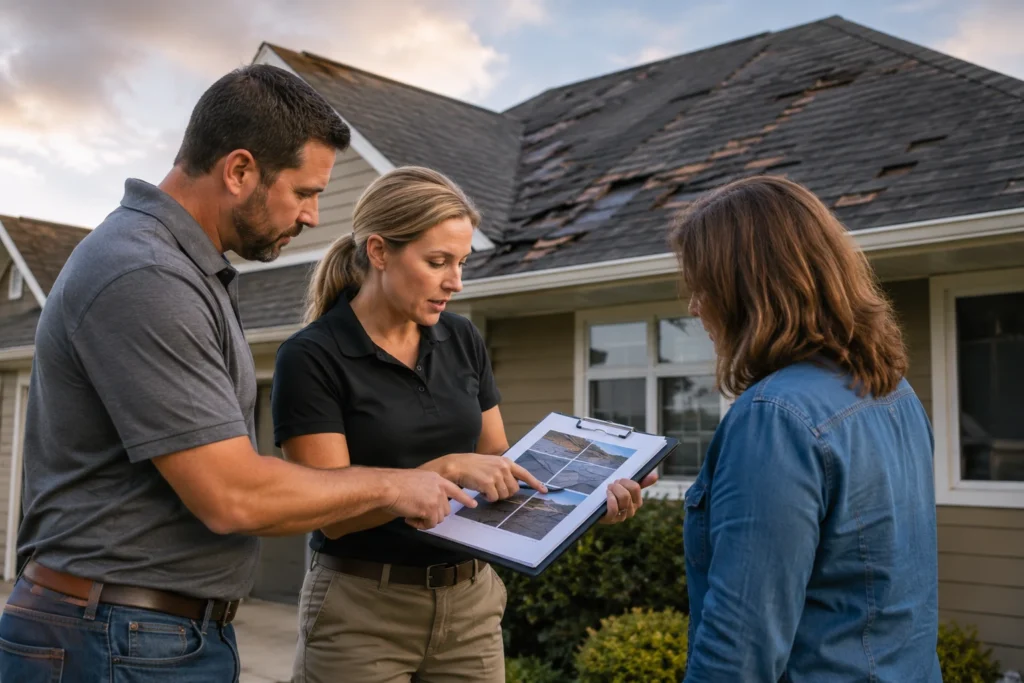
A roof claim second inspection can be the difference between walking away with an underpaid insurance settlement and receiving the compensation needed to restore your property properly. Many homeowners assume the first insurance inspection is the final word. It isn’t. Adjusters can miss damage. Reports can contain errors. Storm-related issues can go unnoticed during a brief roof evaluation. When that happens, a second inspection may become one of the most valuable tools available to a policyholder. Unfortunately, many property owners accept the initial decision without realizing they have options.
That can be expensive. After a major hailstorm or wind event, insurance companies often process hundreds or even thousands of claims within a short period. Adjusters work under significant time pressures. While many perform thorough inspections, mistakes still happen. Damage can be overlooked. Measurements can be inaccurate. Entire sections of roofing systems may receive little attention.
This is where a roof claim second inspection enters the picture. A reinspection provides another opportunity to evaluate the property, review evidence, identify missed damage, and ensure the claim reflects the true condition of the roof. For homeowners in Addison and throughout Texas, understanding how this process works can have a substantial impact on the final claim outcome.
What Is a Roof Claim Second Inspection?
Simply put, a roof claim second inspection is a follow-up evaluation of a roof after the initial insurance inspection has already occurred. The purpose is straightforward. Someone believes important information was missed.
That “someone” may be:
- The homeowner
- A roofing contractor
- A public adjuster
- An insurance supervisor
- An engineer
During the reinspection, the property is evaluated again to determine whether additional damage exists or whether previous findings should be reconsidered. This is not unusual. In fact, reinspections occur regularly after significant storm events. Insurance claims are based on evidence. When new evidence becomes available, insurance companies often have reason to take another look.
Why Initial Roof Inspections Sometimes Miss Damage
Most homeowners assume adjusters spend hours examining every component of a roof. That assumption is understandable. The reality is often different. Following a major storm, adjusters may inspect multiple properties every day. Even highly skilled professionals can overlook important details under those conditions. Several factors contribute to missed damage.
Time Constraints
Storms create claim surges. An adjuster handling dozens of claims each week may have limited time available at each property. While they aim to be thorough, practical limitations exist. A complex roofing system deserves careful evaluation. Sometimes it doesn’t receive enough time.
Accessibility Challenges
Not every roof is easy to inspect.
Factors that complicate inspections include:
- Steep slopes
- Multiple roof elevations
- Tall structures
- Safety concerns
- Weather conditions
Some areas may not receive the same level of scrutiny as others.
Hidden Damage
Many forms of storm damage are subtle. Examples include:
| Hidden Damage Type | Why It’s Often Missed |
| Creased shingles | Difficult to spot from certain angles |
| Lifted tabs | May reseal temporarily |
| Soft metal impacts | Sometimes overlooked during quick inspections |
| Flashing damage | Often hidden beneath materials |
| Underlayment issues | Not visible from the surface |
A roof may appear relatively normal from the ground while significant damage exists above.
Human Judgment
Insurance inspections involve interpretation. One adjuster may view damage differently than another. This doesn’t necessarily mean someone is wrong. It simply reflects the reality that roofing evaluations often contain subjective elements. That is one reason second inspections can produce dramatically different conclusions.
Common Reasons Homeowners Request a Roof Claim Second Inspection
Not every claim requires a reinspection. However, certain situations frequently justify one.
The Claim Was Denied
Denials often trigger requests for additional review. If a contractor identifies storm damage that does not appear in the insurance report, a second inspection may be appropriate.
The Settlement Appears Too Low
Many homeowners become concerned when repair estimates differ significantly from insurance estimates. Large discrepancies deserve investigation.
Repairs Were Approved Instead of Replacement
This is one of the most common disputes. An insurance carrier may determine repairs are sufficient. A roofing professional may conclude replacement is necessary. A reinspection provides an opportunity to revisit those findings.
Damage Was Classified as Wear and Tear
Insurance companies do not cover normal aging. However, storm damage is sometimes mistaken for wear and tear. Additional evidence may help clarify the distinction.
Contractors Identify Additional Damage
Roofing contractors spend every day evaluating roof systems. Their findings frequently uncover issues not included in the original insurance estimate. When that happens, requesting another inspection may make sense.
Signs Your Claim May Benefit from a Second Inspection
Many homeowners struggle to determine whether their situation warrants additional review. Several warning signs deserve attention.
Missing Shingles
Missing shingles are obvious indicators of potential wind damage. Even a few missing tabs can expose underlying materials to moisture intrusion.
Granules Accumulating in Gutters
Granule loss often follows hail impacts. Excessive accumulation may indicate roofing materials have been compromised.
Interior Water Stains
Water rarely enters a home without a cause. Ceiling stains frequently point toward roof-related issues.
Damaged Gutters and Downspouts
Hail impacts commonly affect soft metals before roofing materials show visible signs of damage.
Look for:
- Dents
- Impact marks
- Bent components
- Damaged screens
Neighboring Roof Replacements
While every property is unique, widespread neighborhood damage may support further investigation. If numerous nearby homes receive roof replacements after the same storm, additional review may be justified.
The Benefits of a Roof Claim Second Inspection
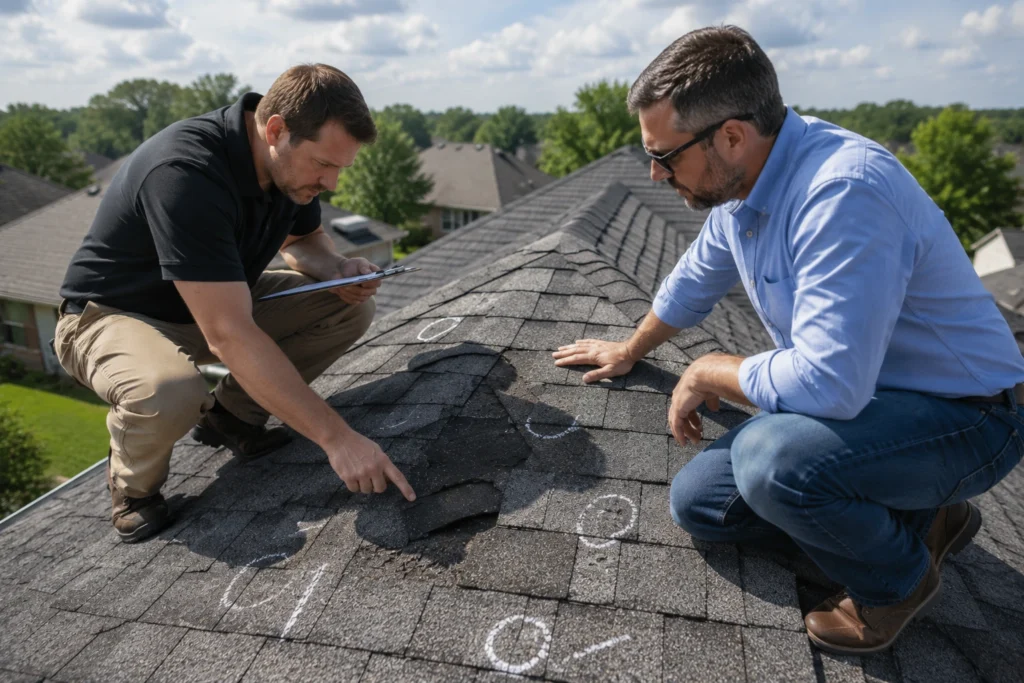
The value of a reinspection extends beyond simply finding more damage. It creates opportunities. Sometimes significant opportunities.
Better Documentation
The strongest insurance claims rely on evidence.
A second inspection often produces:
- Additional photographs
- More detailed measurements
- Supplemental reports
- Expert opinions
Documentation strengthens negotiations.
Correcting Errors
Mistakes happen. Measurements can be inaccurate. Damage can be overlooked. Reinspections provide a mechanism for correcting those issues.
Independent Professional Input
When contractors and public adjusters participate in the process, additional expertise enters the conversation. That can be valuable. Especially during disputed claims.
Potentially Higher Settlements
If additional damage is identified, claim values may increase. While outcomes vary, reinspections frequently result in revised estimates.
Improved Negotiation Position
Facts drive negotiations. The more evidence available, the stronger the homeowner’s position becomes.
What Evidence Strengthens a Reinspection Request?
Insurance companies respond to evidence. Opinions alone rarely move claims forward. The goal is to build a clear, well-supported case.
Photographs
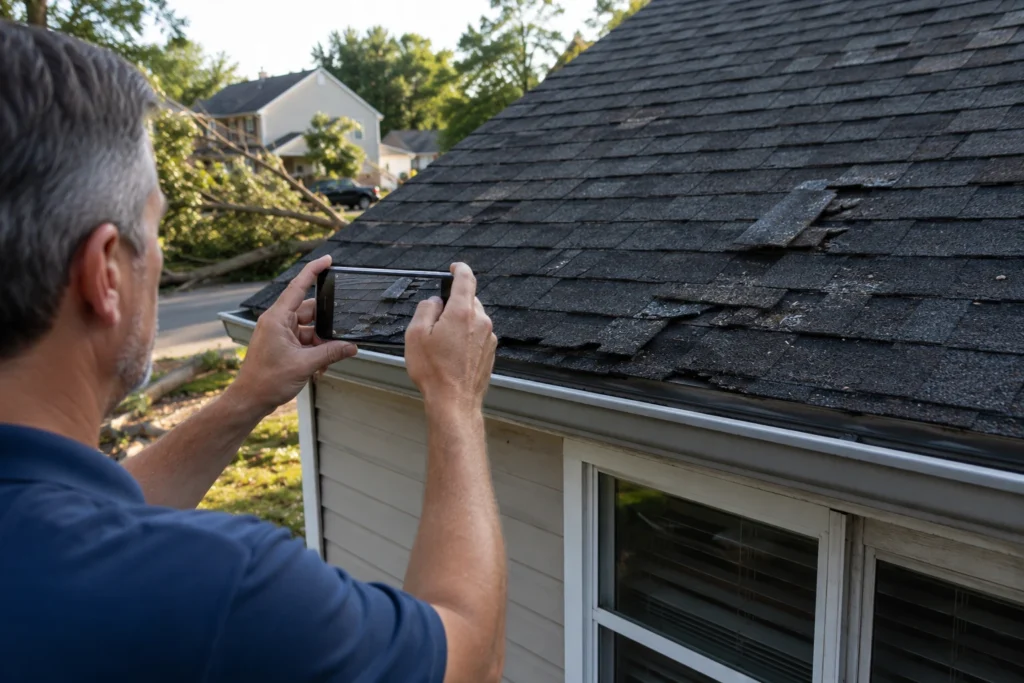
Photos remain among the most persuasive forms of evidence.
Effective documentation includes:
- Wide-angle roof views
- Close-up damage images
- Multiple roof slopes
- Gutters and downspouts
- Exterior elevations
- Interior damage
Take photographs from several angles whenever possible.
Contractor Reports
Professional roofing assessments often provide critical support.
Strong reports typically include:
- Damage descriptions
- Measurements
- Photographs
- Recommended repairs
- Replacement justifications
Weather Data
Weather documentation can help establish causation.
Insurance carriers frequently review:
| Evidence | Purpose |
| Hail Reports | Confirm storm activity |
| Wind Reports | Verify wind speeds |
| Radar Data | Establish storm path |
| Weather Records | Confirm event timing |
When damage aligns with documented weather events, claim credibility improves significantly.
Maintenance Records
A well-maintained roof strengthens a homeowner’s position. Maintenance records can demonstrate that damage resulted from a storm rather than neglect.
The Waiting Game After Filing a Claim
One of the most frustrating aspects of any property loss involves uncertainty. The Waiting Game After Filing a Claim often creates confusion, stress, and unrealistic expectations. Many homeowners assume the insurance company will quickly inspect the property, approve the claim, and issue payment. Sometimes that happens. Often it does not.
Claim investigations take time. Additional reviews take time. Reinspections take time. While waiting can be frustrating, rushing to accept an inadequate settlement can create far larger problems later. Patience combined with strong documentation typically produces better long-term outcomes.
Around the midpoint of complicated claim reviews, homeowners frequently encounter technical discussions involving engineering principles, material degradation, and structural performance. Concepts from fields such as Tribology occasionally appear in expert reports when evaluating wear patterns, impact effects, and material interactions on roofing systems.
What Happens During a Roof Claim Second Inspection?
Many homeowners are unsure what to expect. The process is generally straightforward. First, the inspection is scheduled. Then the relevant parties attend.
Those individuals may include:
- The homeowner
- Insurance representatives
- Roofing contractors
- Public adjusters
- Engineers
The inspection itself typically involves a detailed review of all claimed damage. Every slope should be evaluated. Every concern should be discussed. Every question should be asked. Preparation matters. The more organized the evidence, the more productive the inspection becomes.
How Public Adjusters Help During a Roof Claim Second Inspection
A roof claim second inspection becomes far more effective when someone is actively advocating for the policyholder. That is where public adjusters can provide significant value. Insurance company adjusters work for the insurance carrier. Public adjusters work for the policyholder.
The distinction matters. Their role is not simply to attend meetings or review paperwork. They evaluate damage, organize evidence, review policy language, prepare claim documentation, and negotiate on behalf of the property owner.
During a second inspection, a public adjuster may help by:
- Identifying overlooked storm damage
- Reviewing the original estimate for omissions
- Presenting supporting documentation
- Coordinating with contractors and experts
- Challenging inaccurate findings
- Ensuring all damaged components are inspected
Many homeowners are unfamiliar with roofing systems. That’s completely normal. Most people do not spend their weekends studying shingles, flashing systems, ridge vents, underlayment requirements, and local building codes. A public adjuster does.
That expertise can become particularly valuable when the claim involves disputed damage, low settlement offers, or complex repair requirements. For many property owners in Addison, professional representation provides peace of mind during what can otherwise become a stressful and confusing process.
Common Mistakes Homeowners Make Before a Reinspection
A second inspection creates an opportunity. However, that opportunity can be wasted if homeowners make avoidable mistakes. Let’s look at some of the most common ones.
Waiting Too Long
Time is rarely your friend after a storm. Weather continues. Roofs age. Additional damage can occur. The longer a homeowner waits, the harder it may become to connect damage directly to a specific storm event. Prompt action often produces stronger claims.
Failing to Document Damage
This happens more often than people realize. A homeowner notices damage. They assume the adjuster will see it. The adjuster doesn’t. Now there is no documentation supporting the concern. Take photographs. Take videos. Document everything. You can never have too much evidence.
Not Attending the Inspection
Many property owners skip the reinspection entirely. That can be a mistake.
Being present allows homeowners to:
- Ask questions
- Point out concerns
- Clarify timelines
- Provide documentation
- Understand findings
Participation helps prevent misunderstandings.
Ignoring Interior Damage
Some homeowners focus entirely on the roof. The interior tells part of the story too.
Water intrusion often creates:
- Ceiling stains
- Damaged drywall
- Wet insulation
- Flooring damage
- Mold concerns
These conditions may strengthen the overall claim.
Accepting the First Response
Insurance companies sometimes revise their position after additional information becomes available. A denial is not always final. A low estimate is not always final. A roof claim second inspection exists because insurance claim evaluations can change.
Roof Claim Second Inspection vs. Insurance Appraisal
Many homeowners confuse these two processes. They are not the same. Understanding the difference is important.
Roof Claim Second Inspection
A second inspection focuses primarily on damage evaluation. The goal is to determine whether damage was missed, misunderstood, or improperly categorized.
Questions often include:
- Was hail damage overlooked?
- Was wind damage identified correctly?
- Should repairs be expanded?
- Does replacement make more sense?
The inspection focuses on facts found at the property.
Insurance Appraisal
Appraisal is a formal dispute resolution process. Rather than debating whether damage exists, appraisal typically addresses the value of the loss. Each side selects an appraiser. The appraisers select an umpire. Together they work toward resolving disagreements regarding claim valuation.
Consider the distinction below:
| Second Inspection | Appraisal |
| Reviews damage findings | Reviews claim value |
| May uncover new damage | Focuses on pricing disputes |
| Conducted at property | Formal dispute process |
| Usually earlier in claim | Often later in claim |
| May lead to revised estimate | May lead to binding valuation |
In many cases, a roof claim second inspection occurs before appraisal becomes necessary.
What If the Second Inspection Still Results in a Dispute?
Not every disagreement disappears after a reinspection. Sometimes both sides continue to view the claim differently. When that happens, additional options may exist.
Request Further Review
Insurance companies often have supervisory personnel available to review disputed claims. Escalation can sometimes resolve concerns.
Submit Supplemental Documentation
New evidence frequently changes conversations.
Examples include:
- Additional contractor reports
- Engineering assessments
- Weather documentation
- Material testing
- Building code references
Strong documentation remains one of the most powerful tools available.
Explore Appraisal Options
Many property insurance policies contain appraisal provisions. These provisions may provide a pathway for resolving valuation disputes without litigation.
Consult Professional Representation
Complex claims often benefit from experienced guidance. Public adjusters, roofing consultants, and attorneys may all play roles depending on the circumstances. The key is understanding available options before making decisions.
Real-World Scenario: How a Second Inspection Changes Claim Outcomes
Imagine the following situation. A severe hailstorm moves through the area. The homeowner notices dents on gutters, damaged screens, and several water stains developing inside the house. A claim is filed. The insurance company conducts an inspection. A few weeks later, the carrier issues a report.
The conclusion? Minor repairs only. No roof replacement. No significant damage. The homeowner is frustrated. A contractor then performs an independent evaluation. The findings are dramatically different.
The contractor identifies:
- Functional hail damage
- Multiple creased shingles
- Damaged flashing
- Vent impacts
- Significant granule loss
Supporting photographs are provided. Weather records confirm hail activity. A roof claim second inspection is requested. During the reinspection, additional evidence is reviewed. The adjuster spends substantially more time evaluating the roof. Several previously overlooked conditions are documented. The insurance company ultimately revises the estimate. The settlement increases significantly. Does every claim follow this path? No. But situations like this occur regularly throughout the insurance industry. The lesson is simple. When evidence suggests damage was overlooked, homeowners should not assume the initial inspection is necessarily the final answer.
Roof Claim Second Inspection Checklist
Preparation improves outcomes. Use the following checklist before requesting a reinspection.
Before the Inspection
Gather:
✓ Insurance estimate
✓ Claim correspondence
✓ Contractor reports
✓ Roof photographs
✓ Interior damage photographs
✓ Weather documentation
✓ Maintenance records
✓ Repair invoices
Organize everything.
A well-documented claim tells a clearer story.
During the Inspection
Remember to:
✓ Attend whenever possible
✓ Ask questions
✓ Point out concerns
✓ Take notes
✓ Photograph the inspection process
✓ Ensure all roof elevations are reviewed
✓ Discuss interior damage
✓ Confirm damaged accessories are evaluated
Small details matter.
After the Inspection
Follow up promptly.
Review:
✓ Inspection notes
✓ Revised estimates
✓ Claim communications
✓ Supplemental requests
✓ Deadlines
Maintaining organized records can make future negotiations far easier.
Why Persistence Often Pays Off
Insurance claims rarely follow a perfectly straight path. That is especially true after large storms. Initial inspections happen quickly. Information evolves. Contractors identify concerns. Additional evidence emerges. New conclusions become possible.
The homeowners who achieve the best outcomes are often the ones who remain engaged throughout the process. They ask questions. They gather documentation. They challenge findings when appropriate. They stay involved. Most importantly, they understand that a roof claim second inspection exists for a reason. Insurance claims are not always perfect on the first attempt.
Final Thoughts on Roof Claim Second Inspection
A roof claim second inspection can be one of the most important opportunities available to homeowners facing a denied, underpaid, or disputed insurance claim. The process is not about creating damage that does not exist. It is about ensuring all legitimate storm damage is properly identified, documented, and considered. When important damage is overlooked during an initial inspection, the financial consequences can be substantial. Necessary repairs may go unpaid. Roof replacements may be delayed. Property conditions may worsen over time.
A thorough reinspection helps reduce those risks. For homeowners in Addison, understanding the value of a second inspection can make a significant difference when navigating complex roof insurance claims. Whether the concern involves hail damage, wind damage, missing components, or disputed repair recommendations, additional review may reveal information that changes the entire direction of the claim.
If you believe your insurance company missed damage or undervalued your loss, do not assume the first decision is the final one. Property owners throughout Addison have successfully strengthened claims through better documentation, expert evaluations, and well-supported reinspections. Before accepting an inadequate settlement, make sure every damaged component has been properly evaluated. A careful roof claim second inspection may ultimately be the step that helps secure a fair and accurate claim outcome.
FAQs
A roof claim second inspection is a follow-up review of a roof insurance claim when damage may have been missed or incorrectly assessed during the initial inspection.
Yes. If you have new evidence, contractor findings, or documentation showing storm damage, you can request a reinspection.
No. However, if additional covered damage is identified, the insurance company may revise its estimate or claim decision.
The homeowner, roofing contractor, public adjuster, insurance representative, and sometimes engineers may attend the inspection.
It is generally best to act as soon as possible after receiving the claim decision to preserve evidence and strengthen your position.
Photographs, contractor reports, weather records, maintenance records, and documentation of interior damage can all strengthen your case.
Yes. Contractors often identify damage that may have been overlooked and can explain repair or replacement recommendations.
A second inspection focuses on evaluating damage, while appraisal is typically used to resolve disputes over the value of the loss.
High claim volumes, limited inspection time, accessibility challenges, and subtle forms of storm damage can all contribute to overlooked issues.
In complex or disputed claims, a public adjuster can help document damage, present evidence, and advocate for a fair settlement.