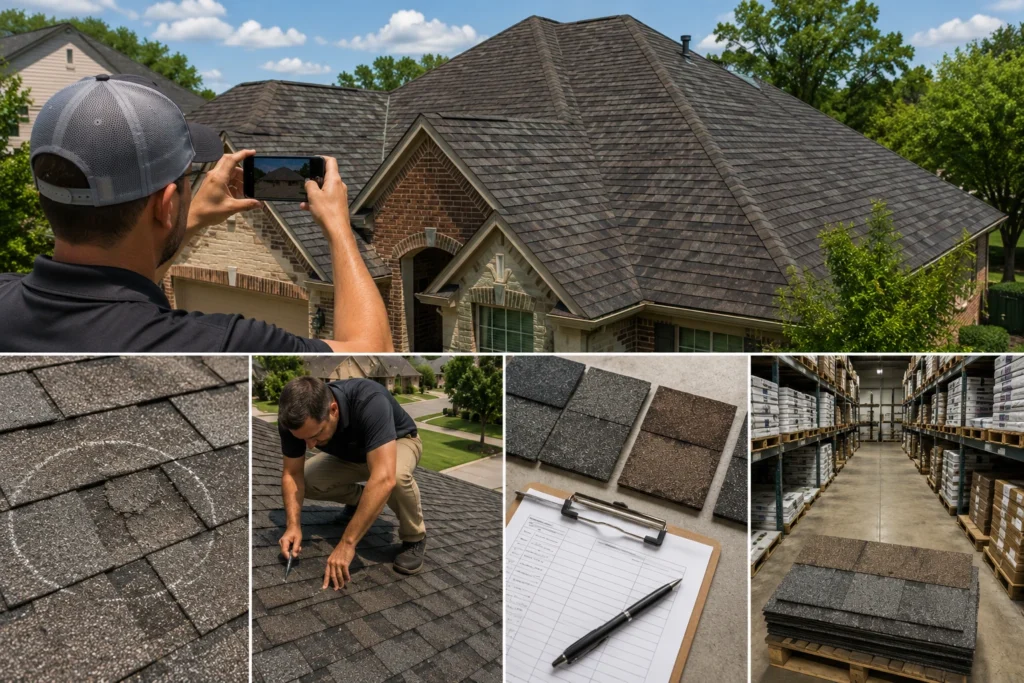
Before diving into roof insurance claims, it helps to understand how consistency and uniformity affect many industries. One interesting example is the concept of homogeneity . While not directly related to roofing, the idea of maintaining a consistent appearance plays an important role in roof matching disputes. Storm season in North Texas can arrive with very little warning. One day your roof looks perfectly fine. The next, hailstones have battered shingles, strong winds have lifted roofing materials, and an insurance claim suddenly becomes part of your life.
That is often when homeowners begin searching for information about matching laws for roof replacement in Addison, TX. Most people assume that if a storm damages part of a roof, the insurance company will automatically replace the entire thing. Unfortunately, insurance claims rarely work that way. In many situations, carriers approve repairs to only the damaged section, leaving homeowners wondering why a patchwork roof is considered an acceptable solution.
The reality is more complicated. Questions involving matching laws for roof replacement in Addison, TX often involve policy language, roofing material availability, weathering differences, contractor opinions, and insurance claim negotiations. Understanding these factors can help homeowners make informed decisions and avoid costly mistakes after a loss. For homeowners in Addison dealing with hail damage, wind damage, or storm-related roof claims, knowing how matching disputes work is one of the most important steps toward protecting both the appearance and value of a home.
Understanding Roof Matching
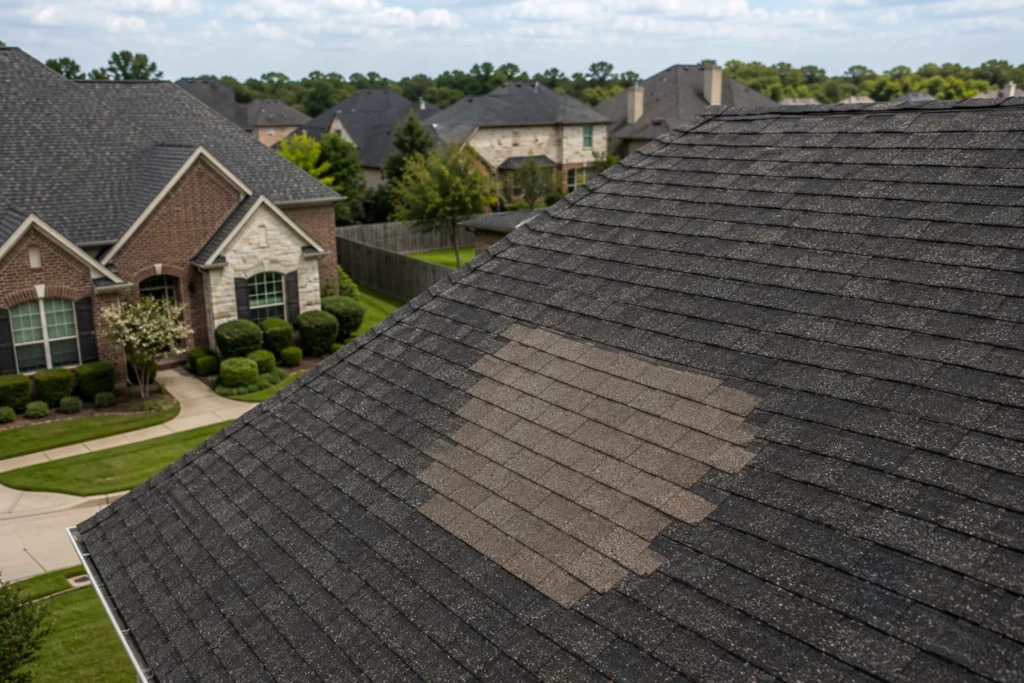
Roof matching refers to the ability to replace damaged roofing materials with materials that blend consistently with the existing roof. Simple enough. But achieving a true match is often much harder than it sounds. Imagine replacing a handful of shingles on a roof that has been exposed to Texas heat, sunlight, storms, and seasonal weather changes for ten years. Even if the manufacturer still produces the same color, the new shingles may appear noticeably different from the surrounding roof.
The contrast can be obvious. Fresh shingles often have different shades, textures, and granule characteristics than older materials. That difference is what creates many matching disputes. Homeowners generally view the roof as a single system. Insurance companies sometimes evaluate it as a collection of individual components. Those two perspectives do not always align.
Why Matching Matters
Many homeowners initially assume matching is purely cosmetic. It is not.
A mismatched roof can create several practical concerns:
- Reduced curb appeal
- Lower buyer confidence
- Potential appraisal concerns
- Questions during home inspections
- Neighborhood appearance issues
- Homeowner association concerns
When visible repairs stand out from the rest of the roof, the property may appear damaged even after repairs have been completed. That perception can affect how others view the home. For many homeowners, restoring the property’s appearance is just as important as restoring its functionality.
Does Texas Have a Roof Matching Law?
This is one of the most frequently misunderstood aspects of roofing claims. Texas does not currently have a statewide statute that automatically requires insurance companies to replace an entire roof whenever matching cannot be achieved. Many homeowners are surprised to learn this.
Instead, claim outcomes often depend on:
- Insurance policy language
- Replacement cost provisions
- Roofing material availability
- Scope of damage
- Contractor assessments
- Supporting documentation
- Claim negotiations
Because there is no automatic matching requirement, every claim must be evaluated individually. Two homes on the same street can experience similar storm damage yet receive very different claim outcomes depending on the facts involved. This reality makes understanding matching laws for roof replacement in Addison, TX especially important for property owners.
Why Insurance Companies Often Approve Partial Repairs
Insurance carriers generally focus on restoring damaged property to a functional condition. That approach often leads to repair-only recommendations. From the insurer’s perspective, replacing a limited area may be sufficient if the damaged portion can be repaired.
The reasoning typically looks something like this:
| Insurance Position | Explanation |
| Damage is localized | Only affected sections require replacement |
| Comparable materials exist | Exact matching may not be necessary |
| Roof function is restored | Appearance concerns are secondary |
| Repairs cost less | Lower overall claim expense |
Homeowners often see things differently. They are not simply looking at a repair estimate. They are looking at their home. A roof with visibly different sections may technically function correctly while still creating concerns about appearance, value, and long-term satisfaction. That difference in perspective is often at the heart of disputes involving matching laws for roof replacement in Addison, TX.
Common Reasons Roof Matching Becomes Difficult
Discontinued Roofing Products
One of the most common matching challenges involves discontinued shingles. Roofing manufacturers routinely update product lines. Colors change. Textures change. Entire product series disappear from the market.
A roof installed ten years ago may contain materials that are no longer available from any supplier. When that happens, obtaining a true match becomes significantly more difficult. Even products marketed as replacements may have noticeable differences once installed.
Weathering and Aging
Time changes roofing materials. Texas weather accelerates that process. Years of exposure to sunlight, heat, rain, hail, and wind alter the appearance of shingles.
Common changes include:
- Color fading
- Granule loss
- Surface wear
- Texture changes
- Uneven weathering
New shingles placed beside weathered shingles often stand out immediately. This can create visible repair lines across the roof.
Manufacturing Variations
Even when the same product remains available, manufacturing differences can create matching problems.
Different production batches may contain slight variations in:
- Color
- Granule blends
- Surface texture
- Reflectivity
What appears identical in a catalog may look very different on an actual roof.
Repair Visibility
Some repairs may technically match according to product specifications while remaining highly visible from the street. Homeowners frequently object to repair solutions that create obvious inconsistencies. In these situations, the debate often shifts from functionality to restoration quality.
Common Storm Damage Scenarios in Addison
North Texas weather is one of the primary reasons roof claims occur so frequently. Homeowners in Addison are no strangers to severe storms.
Hail Damage
Hail is among the leading causes of roofing claims.
Damage may include:
- Granule displacement
- Surface bruising
- Cracked shingles
- Reduced lifespan
- Accelerated deterioration
While hail damage may appear isolated initially, closer inspections often reveal more widespread impacts.
Wind Damage
Strong winds can compromise roofing systems in several ways.
Common examples include:
- Lifted shingles
- Torn shingles
- Creased shingles
- Broken seals
- Missing materials
Wind damage frequently creates situations where repairs are possible but matching becomes problematic.
Combined Storm Damage
Many North Texas storms involve both hail and wind. This combination can affect multiple roof slopes and roofing components simultaneously. As the scope of damage increases, matching concerns often become more significant.
Why Addison Homeowners Face Unique Challenges
The climate in Addison contributes to roofing issues. Frequent hail events, intense summer heat, and strong seasonal storms create conditions that accelerate roof aging.
As roofs age, matching becomes increasingly difficult. This is one reason homeowners frequently encounter questions involving matching laws for roof replacement in Addison, TX after severe weather events.
How Insurance Companies Evaluate Matching Claims
Understanding how claims are evaluated can help homeowners prepare more effectively. Insurance carriers generally follow a structured process when assessing roof damage.
Initial Inspection
The claim typically begins with an inspection.
Adjusters often document:
- Visible storm damage
- Roof age
- Material type
- Roof condition
- Repair feasibility
The information gathered during this inspection frequently influences the entire claim.
Material Availability Research
Many carriers investigate whether matching materials remain available.
This may involve:
- Manufacturer inquiries
- Supplier searches
- Product identification services
- Contractor consultations
Availability findings can significantly influence settlement decisions.
Scope Development
After gathering information, the insurer develops a scope of repairs.
Potential outcomes include:
- Spot repairs
- Single-slope replacement
- Multiple-slope replacement
- Full roof replacement
This stage is often where disagreements emerge. Homeowners may believe a broader replacement is necessary while the insurer recommends a more limited repair approach.
Engineering Evaluations
In some claims, engineering consultants become involved.
Engineers may evaluate:
- Storm impacts
- Repair feasibility
- Functional damage
- Roofing performance
These reports can influence claim decisions, although they are not always the final authority regarding coverage or settlement discussions.
The Importance of Replacement Cost Coverage
Not all insurance policies provide the same level of protection. Understanding your policy type matters. A lot.
Replacement Cost Value Coverage
Replacement Cost Value, commonly called RCV coverage, generally pays the cost of replacing covered damage with comparable materials, subject to policy conditions.
Benefits may include:
- Higher claim payments
- Reduced depreciation impact
- Better restoration opportunities
- Improved replacement options
For homeowners dealing with matching concerns, replacement cost coverage can be especially important.
Actual Cash Value Coverage
Actual Cash Value policies work differently. These policies factor depreciation into claim payments. Older roofs often receive substantially lower settlements under ACV coverage. As a result, homeowners may face larger out-of-pocket expenses when repairs or replacement become necessary.
Policy Language Matters
No two insurance policies are exactly alike. Small wording differences can have major impacts on claim outcomes.
Homeowners should carefully review:
- Coverage forms
- Exclusions
- Endorsements
- Deductibles
- Replacement provisions
- Cosmetic damage limitations
Many disputes involving matching laws for roof replacement in Addison, TX ultimately come down to the language contained within the insurance policy itself.
How to Prove a Roof Matching Problem
When a homeowner disagrees with a repair-only recommendation, evidence becomes essential. Strong documentation often makes the difference between a successful challenge and a denied request. Simply stating that the roof will not match is rarely enough. Supporting proof matters. In the next section, we’ll cover the documentation strategies, claim negotiation process, and the important question many homeowners ask after a claim dispute begins: What Does a Public Adjuster Do for You?
How to Prove a Roof Matching Problem
When a homeowner disagrees with an insurance company’s repair recommendation, the discussion quickly shifts from opinions to evidence. That is where preparation becomes important. Insurance carriers evaluate documentation. Contractors rely on observations. Homeowners often rely on common sense. Successful claims usually combine all three. The stronger the evidence, the stronger the argument.
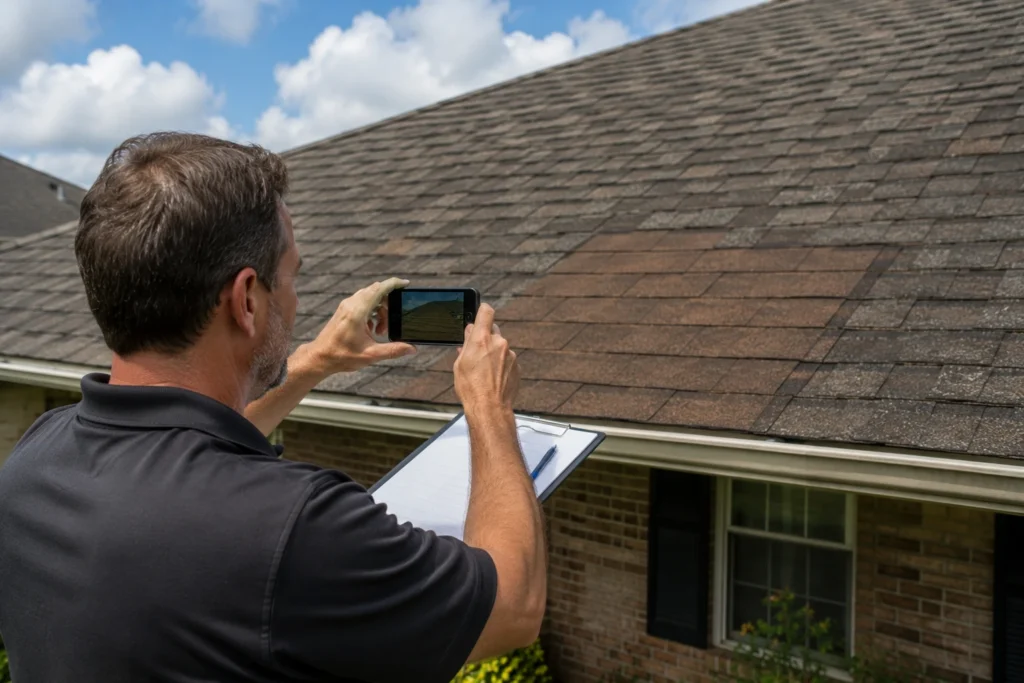
Take Comprehensive Photographs
Photographs are often the foundation of a roof claim. However, many homeowners focus only on the obvious damage. That is a mistake.
A complete photo package should include:
- Close-up damage images
- Wide-angle roof photographs
- Street-view perspectives
- Multiple roof elevations
- Existing roof appearance
- Areas where repairs would be visible
Photos should help tell the complete story. The goal is not simply to show damage. The goal is to demonstrate why repairs may create an inconsistent appearance.
Obtain Contractor Assessments
Experienced roofing contractors encounter matching issues regularly.
A contractor may identify concerns involving:
- Discontinued shingles
- Color variations
- Texture inconsistencies
- Material shortages
- Repair feasibility
Whenever possible, request written opinions rather than verbal comments. Written documentation carries more weight during claim discussions.
Verify Material Availability
One of the strongest pieces of evidence in many matching disputes is proof that the original roofing material is no longer available.
Potential sources include:
- Manufacturer statements
- Distributor communications
- Supplier letters
- Product discontinuation notices
When matching materials cannot be obtained, broader replacement discussions often become more relevant.
Document Visual Inconsistencies
Insurance companies may focus heavily on functionality. Homeowners should also document appearance concerns.
Examples include:
- Different roof colors
- Obvious repair lines
- Uneven weathering
- Contrasting textures
Visual evidence can help demonstrate why a repair-only solution may not fully restore the property.
Why Matching Disputes Often Lead to Underpaid Claims
Many homeowners assume the first settlement offer is the final answer. It usually is not. Insurance claims evolve. Additional information emerges. Supplemental estimates are submitted. Further inspections occur. The challenge is that many homeowners do not realize additional options may exist.
Limited Repair Scopes
Insurers frequently begin with the smallest repair scope they believe is supported by the evidence. That approach can leave additional concerns unaddressed.
For example:
- Additional damaged slopes
- Matching challenges
- Material discontinuation
- Hidden damage
These issues may not always appear in the initial estimate.
Hidden Damage Concerns
Not all storm damage is visible from the ground.
Roofing systems may experience:
- Broken seals
- Wind uplift
- Impact bruising
- Reduced weather resistance
Comprehensive inspections often reveal issues missed during initial evaluations.
Material Availability Assumptions
Insurance companies sometimes identify materials they believe are acceptable replacements. Contractors may disagree. What appears comparable on paper may look dramatically different once installed. That distinction becomes particularly important in disputes involving matching laws for roof replacement in Addison, TX.
Incomplete Documentation
Weak documentation can significantly reduce claim leverage. Unfortunately, many homeowners do not begin gathering evidence until after disagreements arise. By then, opportunities may have been lost. Early documentation almost always produces better results.
What Does a Public Adjuster Do for You?
One of the most common questions homeowners ask after a claim dispute begins is simple: What exactly does a public adjuster do? The answer is straightforward. A public adjuster works for the policyholder, not the insurance company. Their role is to help homeowners understand coverage, document losses, and negotiate claim settlements.
Reviewing the Insurance Policy
Insurance policies are complicated documents. Important provisions can be buried within dozens of pages of language.
A public adjuster reviews:
- Coverage provisions
- Exclusions
- Endorsements
- Replacement cost language
- Claim requirements
Understanding the policy is often the first step toward identifying potential opportunities for additional recovery.
Documenting the Damage
Documentation frequently determines the outcome of a claim.
Public adjusters help organize and present evidence such as:
- Photographs
- Inspection reports
- Contractor estimates
- Material availability research
- Scope comparisons
A well-documented claim is often easier to evaluate and negotiate.
Building a Matching Argument
When roof matching becomes a concern, supporting evidence matters.
A public adjuster may help gather:
- Manufacturer documentation
- Supplier statements
- Roofing expert opinions
- Visual comparisons
- Product availability reports
These materials can help support broader replacement discussions.
Negotiating With the Insurance Carrier
Perhaps the most valuable service involves negotiation. Insurance companies handle claims every day. Most homeowners do not. A public adjuster helps level the playing field by presenting evidence, addressing objections, and advocating for a fair review of the claim.
HOA Requirements, Cosmetic Damage Exclusions, and Real-World Matching Challenges
Another factor many homeowners overlook is the role of homeowner associations. In some neighborhoods, maintaining a consistent appearance is important. A repair that satisfies an insurance carrier may not satisfy HOA requirements.
HOA Appearance Standards
Some homeowner associations require roofing materials to maintain a uniform appearance throughout the property. Consider this scenario. A hailstorm damages one slope of a roof. The insurance company approves repairs. The replacement shingles are technically functional but noticeably different.
The insurer considers the claim resolved. The HOA disagrees. While HOA requirements do not automatically create insurance coverage, they can become relevant when discussing restoration quality and property appearance.
Understanding Cosmetic Damage Exclusions
Some policies contain cosmetic damage exclusions. These provisions attempt to limit coverage for damage that affects appearance but not performance. However, disputes frequently arise regarding whether damage is truly cosmetic.
Questions often include:
- Has the roof’s lifespan been reduced?
- Has weather resistance been compromised?
- Does the damage affect future performance?
- Is the issue merely aesthetic?
The answers are not always obvious. Professional inspections often become important in these situations.
Common Insurance Company Arguments
When matching disputes occur, several arguments appear repeatedly.
| Insurance Company Position | Homeowner Concern |
| Similar materials are available | Similar does not always mean matching |
| Repairs restore functionality | Appearance may still suffer |
| Damage is isolated | Additional impacts may exist |
| Replacement is unnecessary | Uniform appearance may be impossible |
| Product differences are minor | Differences may be highly visible |
Understanding these positions helps homeowners prepare stronger responses.
How Roofing Contractors and Public Adjusters Work Together
Contractors and public adjusters serve different functions, but their work often complements one another.
Roofing Contractors Typically Focus On:
- Roof condition
- Material availability
- Construction concerns
- Repair feasibility
- Replacement recommendations
Public Adjusters Typically Focus On:
- Policy language
- Documentation
- Claim presentation
- Settlement negotiations
- Insurance communications
Together, these perspectives can create a more complete picture of the claim. For example, a contractor may determine that matching shingles are unavailable. A public adjuster may then use that information to support a broader replacement request based on policy provisions and documented evidence.
A Real-World Example of a Matching Dispute
Consider a hypothetical homeowner in Addison. The home has a twelve-year-old architectural shingle roof. A major hailstorm damages one roof slope. The insurance carrier approves replacement of only the affected section. Initially, that sounds reasonable.
However, additional investigation reveals several challenges:
- The original shingles have been discontinued.
- Available replacements differ in color.
- Existing shingles have weathered significantly.
- Repairs will be visible from the street.
- HOA appearance standards require consistency.
Suddenly, the issue becomes much larger than replacing a few damaged shingles. The discussion shifts toward whether the home can truly be restored to its pre-loss condition. Situations like this occur more frequently than many homeowners realize.
The Financial Impact of an Improper Match
Matching disputes are not simply aesthetic disagreements. They can have real financial consequences.
Potential impacts include:
- Reduced curb appeal
- Lower buyer confidence
- Appraisal concerns
- Inspection questions
- Future repair complications
A roof is one of the most visible components of a home. When repairs create obvious inconsistencies, homeowners often feel that the property has not been fully restored. That concern is understandable. This is one reason discussions involving matching laws for roof replacement in Addison, TX continue to generate significant attention after major storm events.
Why Addison Homeowners Should Act Quickly
Timing matters after storm damage. Waiting can create unnecessary complications.
Evidence Changes Over Time
Roofs continue to age. Additional weather events occur. Damage becomes harder to document. The sooner evidence is collected, the better.
Materials Become Harder to Find
Product availability changes constantly. Manufacturers discontinue shingles. Inventory shortages develop. Prompt action improves the likelihood of obtaining useful documentation regarding material availability.
Claim Deadlines Exist
Insurance policies contain reporting requirements and deadlines. Missing important dates can complicate the claim process significantly.
Damage Can Worsen
Small roofing issues rarely improve on their own. Water intrusion and additional deterioration can increase repair costs substantially. Early action protects both the property and the claim.
Practical Steps Homeowners Should Take Immediately
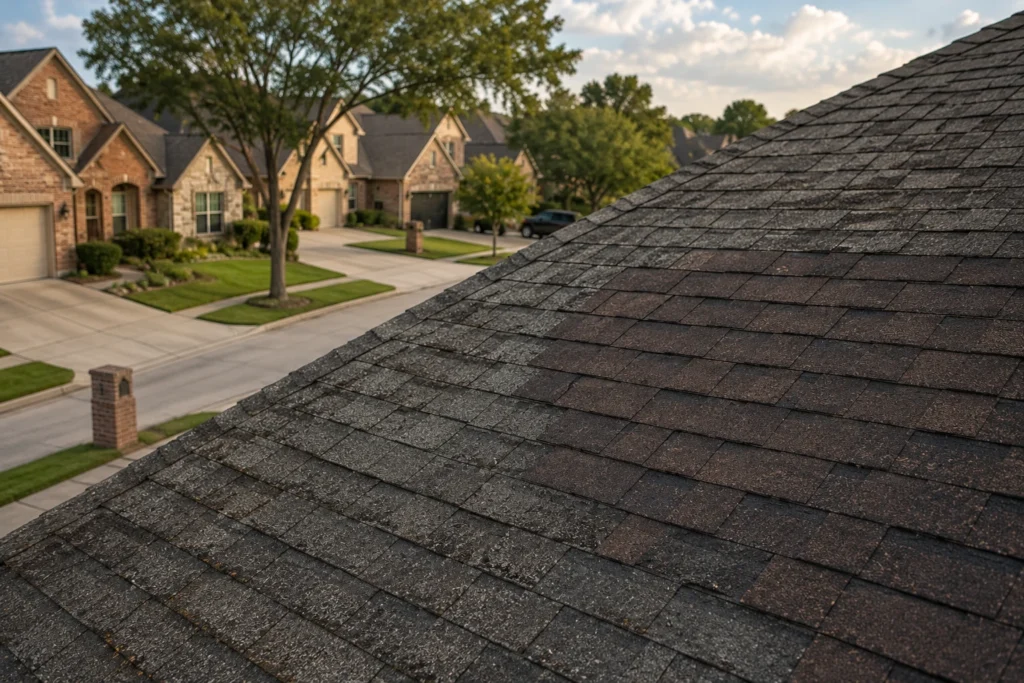
If your roof has sustained storm damage, consider the following steps.
Step 1: Document Everything
Take photographs before making temporary repairs whenever possible.
Capture:
- Roof damage
- Gutters
- Downspouts
- Siding
- Fencing
- Interior damage
The more documentation available, the stronger the claim presentation may become.
Step 2: Review Your Insurance Policy
Understand:
- Coverage limits
- Deductibles
- Exclusions
- Endorsements
- Replacement provisions
Knowledge helps prevent surprises later.
Step 3: Obtain Professional Inspections
Independent evaluations often identify concerns that may not appear during an initial inspection.
Step 4: Preserve Communications
Keep records of:
- Emails
- Letters
- Estimates
- Inspection reports
- Claim notes
Organization is critical throughout the claims process.
Step 5: Seek Professional Assistance When Needed
When significant disagreements arise regarding matching laws for roof replacement in Addison, TX, experienced guidance can help homeowners better understand their options.
Common Myths About Roof Matching
Several misconceptions continue to create confusion.
Myth: Insurance Must Always Replace the Entire Roof
Not necessarily. Claim outcomes depend on policy language, damage conditions, and supporting evidence.
Myth: Similar Shingles Automatically Solve the Problem
Similar materials do not always provide a true match. Color, texture, and weathering differences can remain obvious.
Myth: The First Settlement Offer Is Final
Many claims are supplemented, reviewed, and negotiated after the initial estimate.
Myth: Appearance Never Matters
Appearance can affect property value, marketability, and restoration quality.
It often plays a meaningful role in matching discussions.
Final Thoughts on Matching Laws for Roof Replacement in Addison, TX
Understanding matching laws for roof replacement in Addison, TX requires more than asking whether an insurance company must replace an entire roof. The answer depends on many factors. Policy language matters. Material availability matters. Documentation matters. Expert opinions matter. Negotiation matters.
Most importantly, every claim is unique. A roof that cannot be reasonably matched may justify broader replacement consideration than an insurance company initially recommends. At the same time, successful outcomes usually depend on strong evidence, detailed documentation, and a clear understanding of the policy. Homeowners facing storm damage should take the time to document conditions carefully, gather expert opinions, review coverage provisions, and ask questions before accepting a settlement. For property owners in Addison, understanding how matching disputes develop can help avoid costly mistakes and improve claim outcomes after severe weather events. Storm damage is stressful enough. The claims process should not make it worse.
With the right information, proper documentation, and a proactive approach, homeowners in Addison can place themselves in a much stronger position when navigating roof replacement disputes. Whether the issue involves discontinued shingles, visible repair lines, or broader restoration concerns, understanding matching laws for roof replacement in Addison, TX is one of the most important steps toward protecting both your property and your financial interests. When major claim disagreements arise, many homeowners in Addison discover that preparation, documentation, and professional advocacy can make a meaningful difference in achieving a fair and complete settlement.
FAQs
Matching laws for roof replacement in Addison, TX generally refer to disputes about whether repaired roofing materials must reasonably match the existing roof after covered damage.
No. Texas does not have a statewide law that automatically requires full roof replacement when matching issues arise.
If your shingles are discontinued, it may be difficult or impossible to achieve a consistent appearance, which can become an important factor in claim negotiations.
Yes. Insurers often approve repairs to only the damaged area if they believe the roof can be adequately restored.
It can. A visibly mismatched roof may impact curb appeal and influence how potential buyers view the property.
Possibly. Some homeowner associations have appearance standards that encourage or require a uniform roofing appearance.
Photographs, contractor reports, manufacturer letters, and documentation showing discontinued materials can strengthen your position.
Replacement cost coverage may provide broader restoration benefits than actual cash value coverage, depending on the policy language.
A public adjuster can review the policy, document the loss, gather supporting evidence, and negotiate with the insurance company on your behalf.
You should report storm damage as soon as possible to preserve evidence and avoid potential issues with claim deadlines.