
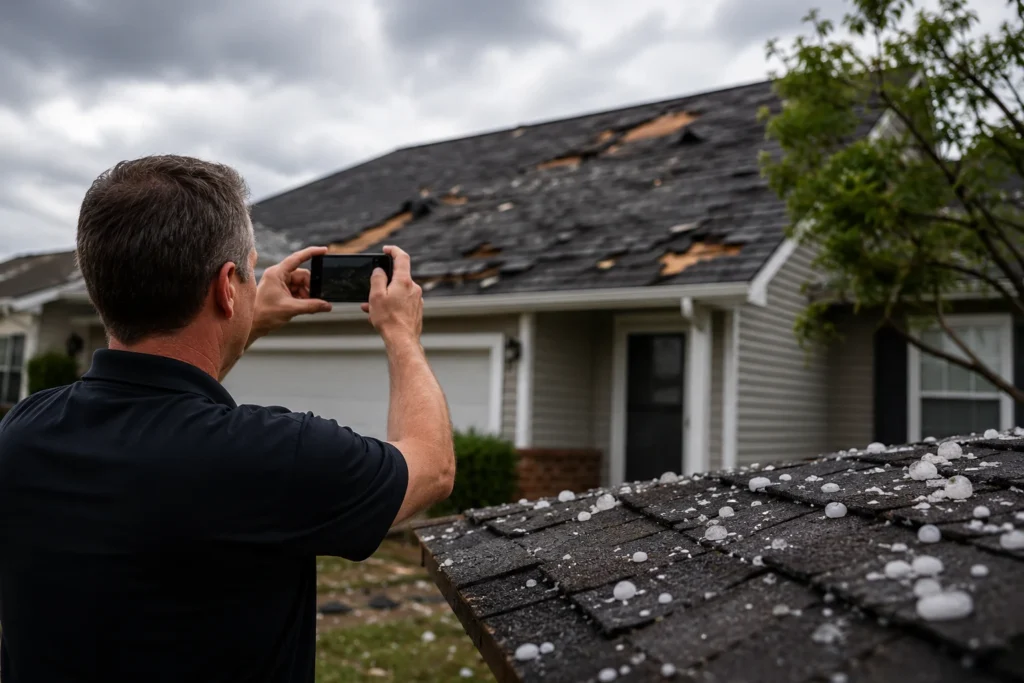
A severe hailstorm can turn an ordinary afternoon into a stressful experience in minutes. One moment your roof is protecting your home. The next, you’re staring at dented gutters, damaged shingles, and the uncertainty of dealing with an insurance company. Understanding the hail damage claim timeline in Addison, TX can help homeowners navigate the process with confidence and avoid costly mistakes that often delay settlements.
Many people assume filing a claim is straightforward. In reality, a hail claim often involves inspections, documentation, estimates, negotiations, supplements, and repairs that can stretch over several weeks or even months. Knowing what happens at each stage can make the difference between a smooth experience and a frustrating one. This guide walks through every phase of the hail damage claim timeline in Addison, TX, from the day the storm hits to the moment repairs are completed and final payments are issued.
Understanding Hail Damage in North Texas
Texas consistently ranks among the states most affected by severe hailstorms. North Texas, in particular, experiences weather conditions that frequently produce large hail capable of damaging homes, vehicles, and commercial buildings. For homeowners, hail damage is not always obvious. A roof may appear intact from the ground while suffering significant functional damage that shortens its lifespan and increases the likelihood of future leaks.
Common hail-related property damage includes:
- Bruised asphalt shingles
- Granule loss
- Cracked roofing materials
- Damaged flashing
- Dented gutters and downspouts
- Broken window screens
- Damaged HVAC units
- Water intrusion
Because some forms of damage are hidden, professional inspections often play an important role early in the claims process.
Why Timing Matters After a Hailstorm
One of the biggest mistakes homeowners make is waiting. Life gets busy. Work deadlines pile up. The roof seems fine. Weeks turn into months. Unfortunately, delays can create complications.
Insurance companies frequently investigate whether damage resulted directly from a reported storm or developed over time. The longer homeowners wait to document and report damage, the more difficult it can become to establish a clear timeline. Prompt action helps preserve evidence, protects the property from additional damage, and keeps the claim moving forward.
Phase One: The Storm Occurs
The hail damage claim process begins the moment the storm passes. Your first priority should always be safety. Wait until conditions are safe before inspecting your property. Avoid climbing onto the roof. Ground-level observations are typically sufficient during the initial assessment.
Look for visible signs such as:
- Dented metal surfaces
- Damaged fencing
- Broken screens
- Fallen tree limbs
- Shingle debris around the property
Photographs should be taken as soon as possible. Capture wide-angle images showing the entire property and close-up images showing specific damage. The more documentation you have, the stronger your claim file may become later.
Keep notes regarding:
- Date of loss
- Approximate storm time
- Observed damage
- Temporary repairs performed
These details may become valuable months later if questions arise during the claim review process.
Phase Two: Initial Property Inspection (Days 1–7)
Within the first week after the storm, homeowners should arrange a more thorough inspection. This step is critical. Many forms of hail damage are invisible from the ground. Roofing systems often sustain impacts that only become apparent during close examination.
A professional inspection may identify:
| Inspection Area | Potential Damage |
| Roof Shingles | Bruising, cracking, granule loss |
| Flashing | Dents and punctures |
| Gutters | Impact marks |
| Siding | Cracks and dents |
| Windows | Seal damage |
| HVAC Equipment | Coil damage |
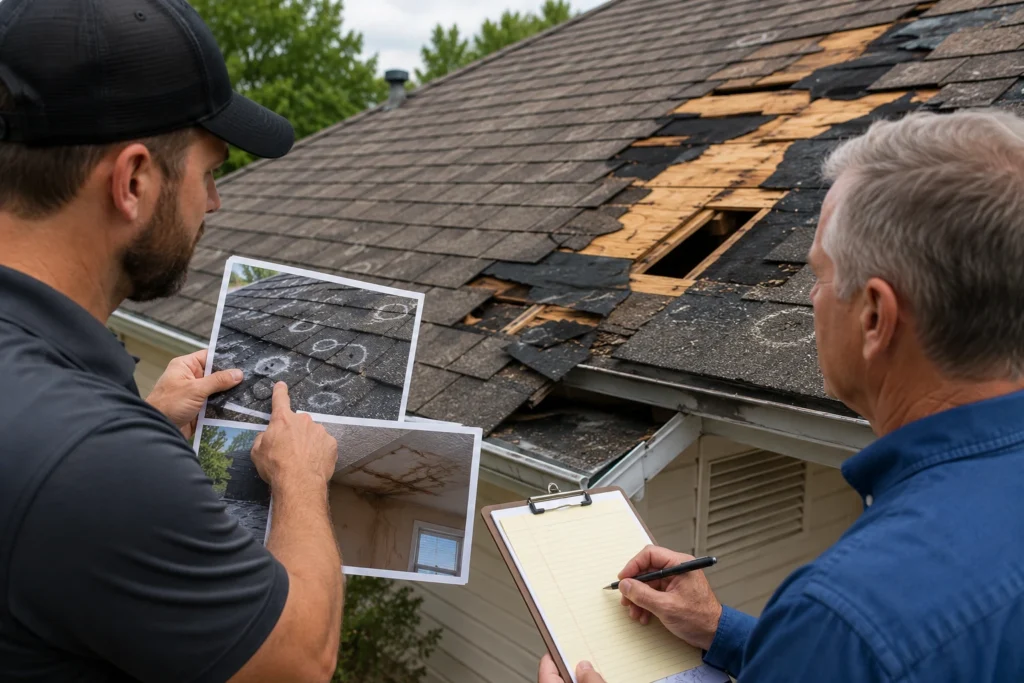
Professional inspectors typically document every damaged component using photographs, measurements, and written observations. This information often becomes a foundation for the insurance claim.
Common Inspection Mistakes
Several errors repeatedly cause problems for homeowners.
Waiting Too Long
Delays allow weather exposure to worsen existing damage.
Assuming No Visible Damage Means No Damage
Many roofing problems remain hidden until leaks develop.
Relying Solely on Visual Ground Inspections
Ground-level observations rarely reveal the full extent of roof damage.
Throwing Away Evidence
Damaged materials may become useful during claim discussions.
Small mistakes early in the process often create larger challenges later.
Phase Three: Filing the Insurance Claim (Days 1–14)
Once damage has been identified, the next step is opening a claim. Most insurance carriers allow claims to be initiated online, by phone, or through mobile applications.
Basic information generally includes:
- Policy number
- Property address
- Date of loss
- Description of damages
- Contact information
After submission, the insurer assigns a claim number and begins the review process. This marks the official start of the hail damage claim timeline in Addison, TX. Many homeowners assume approval happens automatically once a claim is opened. It does not. Opening a claim simply begins the investigation. The insurer must still determine coverage, assess damages, and calculate potential settlement amounts.
What Happens After Filing?

Several things typically occur behind the scenes.
The insurance carrier:
- Opens a claim file
- Assigns an adjuster
- Reviews policy coverage
- Schedules an inspection
- Begins gathering documentation
Communication is important during this stage. Save emails. Document phone calls. Keep records of every interaction. Claims can involve multiple representatives over time, and accurate records help avoid confusion.
Phase Four: Insurance Adjuster Scheduling (Days 7–21)
The next step usually involves scheduling an inspection with the insurance company’s adjuster. The timeline varies significantly. Following a major storm event, adjusters may handle hundreds of claims simultaneously. As a result, scheduling delays are common.
Factors affecting inspection timing include:
- Storm severity
- Number of regional claims
- Adjuster availability
- Property accessibility
- Weather conditions
In quieter periods, inspections may occur within days.
Following widespread storms, homeowners sometimes wait several weeks.
Patience matters here.
However, homeowners should remain proactive and follow up regularly if communication stalls.
What Homeowners Should Do While Waiting
Waiting does not mean doing nothing. Several productive steps can help strengthen a claim.
Continue Photographing Damage
Additional documentation may reveal worsening conditions.
Prevent Further Damage
Temporary protective measures can reduce additional losses.
Save Emergency Repair Receipts
Many policies reimburse reasonable mitigation expenses.
Organize Documentation
Create folders containing:
- Photos
- Inspection reports
- Estimates
- Emails
- Claim correspondence
Being organized now saves considerable stress later.
Phase Five: Insurance Inspection (Weeks 2–4)
The inspection is one of the most important milestones in the hail damage claim timeline in Addison, TX. During the inspection, the adjuster evaluates the property and determines what damage may be related to the reported storm.
The adjuster typically examines:
- Roofing systems
- Gutters
- Downspouts
- Flashing
- Siding
- Exterior surfaces
- Interior damage
Measurements, notes, and photographs are collected. The adjuster then develops an estimate outlining recommended repairs. Homeowners should attend this inspection whenever possible. Questions can be answered in real time, and property-specific concerns can be discussed directly.
Understanding Functional Versus Cosmetic Damage
One issue that frequently arises involves the distinction between cosmetic and functional damage. Cosmetic damage affects appearance. Functional damage affects performance.
For example:
A dented gutter may still function properly despite visible impacts.
Conversely, a bruised shingle may appear minor while significantly reducing the roof’s ability to protect the structure. Coverage decisions often depend on these distinctions. Understanding them helps homeowners evaluate settlement offers more effectively.
Phase Six: Claim Review and Estimate Preparation (Weeks 3–6)
After the inspection concludes, the insurance company begins estimate preparation. This stage involves more than simply pricing repairs.
The insurer must:
- Evaluate coverage
- Analyze inspection findings
- Apply depreciation
- Calculate deductibles
- Determine settlement amounts
Several important terms appear during this stage.
Replacement Cost Value (RCV)
RCV represents the estimated cost to replace damaged property with comparable materials.
Actual Cash Value (ACV)
ACV reflects replacement cost minus depreciation.
Recoverable Depreciation
Many policies initially withhold a portion of payment until repairs are completed.
Deductible
The homeowner’s policy-required contribution toward the loss.
Understanding these concepts helps homeowners interpret settlement documents more accurately.
Why Estimates Sometimes Miss Damage
Insurance estimates are not always perfect. In fact, supplemental requests are common.
Reasons include:
- Hidden damage
- Limited inspection access
- Building code requirements
- Material pricing changes
- Additional repair discoveries
An estimate represents a snapshot based on available information at a specific point in time. As repairs progress, new information frequently emerges. That is normal. And it often leads to additional claim activity.
Phase Seven: Settlement Offer and Coverage Decision (Weeks 4–8)
Eventually, the insurance company reaches a coverage decision. This is the moment many homeowners have been waiting for.
The carrier typically provides a settlement package that includes:
- Scope of repairs
- Estimate details
- Payment information
- Deductible calculations
- Depreciation information
- Coverage explanations
At first glance, the settlement may appear straightforward. However, this is where careful review becomes important. A homeowner should never assume the estimate includes every damaged component simply because a payment was issued. Review the estimate line by line. Compare it against inspection reports, contractor assessments, and documented damage.
Questions worth asking include:
- Does the estimate include all damaged roofing components?
- Were gutters, flashing, vents, and accessories included?
- Are local building code requirements addressed?
- Is interior damage accounted for?
- Were all elevations of the property inspected?
The answers to these questions can significantly affect the total value of a claim.
Understanding Partial Approvals
Not every claim receives full approval. Sometimes the insurance company acknowledges certain damages while excluding others.
For example:
- Roof damage may be covered.
- Interior staining may require additional proof.
- Gutters may be considered cosmetic.
- Certain repairs may be partially approved.
Partial approvals often lead to additional discussions, supplemental requests, or negotiations. That does not necessarily mean something is wrong. It simply means the claim process is continuing.
Phase Eight: Supplement and Negotiation Phase (Weeks 5–10)
One of the least understood parts of the hail damage claim timeline in Addison, TX involves supplements. Many homeowners believe the first estimate is final. In reality, supplements are extremely common. As contractors begin preparing repair plans, they often discover items not included in the original estimate.
Examples include:
| Additional Finding | Potential Impact |
| Damaged decking | Additional replacement costs |
| Code-required upgrades | Increased repair scope |
| Hidden water damage | Interior restoration costs |
| Ventilation corrections | Additional materials and labor |
| Flashing replacement | Expanded roofing repairs |
When these discoveries occur, additional documentation may be submitted to the insurance company. The carrier then reviews the information and determines whether supplemental payments are warranted.
Why Negotiations Occur
Negotiations are not unusual.
Insurance companies and contractors sometimes have differing opinions regarding:
- Scope of work
- Material quantities
- Labor costs
- Building code requirements
- Damage causation
These discussions can extend the claim timeline. However, they also help ensure repairs accurately reflect the actual damage. Homeowners should understand that negotiation does not automatically indicate conflict. Often, it is simply part of reaching an accurate settlement.
Why a Public Adjuster Changes the Outcome for Homeowners
As claims become more complex, many homeowners discover that managing inspections, estimates, supplements, documentation, and negotiations can quickly become overwhelming. This is especially true when significant roof damage, interior water damage, or disputed repair items are involved.
Why a Public Adjuster Changes the Outcome for Homeowners often comes down to documentation and advocacy. A public adjuster works on behalf of the policyholder rather than the insurance company. They review damages, evaluate estimates, identify overlooked items, organize evidence, and help ensure the claim reflects the full scope of covered losses. For homeowners facing large hail claims, professional representation can provide valuable guidance throughout the settlement process.
Phase Nine: Contractor Selection and Repair Scheduling (Weeks 6–12)
Once the claim reaches a point where repairs can proceed, homeowners must select a contractor. This decision deserves careful consideration. The lowest bid is not always the best choice. The highest bid is not automatically the most qualified.
Instead, homeowners should evaluate contractors based on:
- Experience
- References
- Licensing requirements
- Insurance coverage
- Communication quality
- Reputation
Ask questions. Request documentation. Verify credentials. A qualified contractor can help the repair process move efficiently while reducing the likelihood of future issues.
Understanding Repair Delays
Even after claim approval, repairs may not begin immediately. Several factors influence scheduling. Following major North Texas storms, demand often increases dramatically.
Contractors may face:
- Labor shortages
- Material delays
- Supplier backlogs
- Scheduling limitations
As a result, repair start dates may extend several weeks beyond claim approval. This is particularly common after widespread hail events affecting large portions of the region.
Phase Ten: Repair Completion and Final Payment (Months 2–6)
Once repairs begin, the finish line starts coming into view.
The repair timeline depends on:
- Project size
- Material availability
- Weather conditions
- Contractor scheduling
- Property complexity
Simple projects may be completed within days. Large roofing projects involving supplemental repairs may require considerably longer.
Recovering Depreciation
Many homeowners receive an initial payment followed by a second payment later. This second payment often involves recoverable depreciation.
To obtain these funds, homeowners generally need to provide:
- Final invoices
- Proof of completed repairs
- Contractor documentation
- Completion photographs
After verification, the insurance company typically releases the remaining eligible funds. Understanding this process prevents confusion when initial payments appear lower than expected.
Closing the Claim
Before considering the claim complete, homeowners should retain copies of:
- Settlement documents
- Repair invoices
- Warranties
- Inspection reports
- Payment records
- Communication logs
Maintaining a complete claim file can be valuable if questions arise in the future.
Factors That Can Delay a Hail Damage Claim
While every claim follows a similar general path, no two claims progress at exactly the same pace. Several factors commonly extend timelines.
High Claim Volume
Large storms often generate thousands of claims simultaneously. Insurance carriers and contractors may experience temporary backlogs.
Delayed Reporting
Waiting months before reporting damage can create additional investigations.
Documentation Gaps
Missing photographs, reports, or supporting evidence may slow review.
Coverage Disputes
Questions regarding causation or policy interpretation often require additional evaluation.
Hidden Damage Discoveries
New findings during repairs frequently trigger supplemental reviews.
Contractor Availability
Repair scheduling bottlenecks can affect final claim closure. Understanding these factors helps homeowners set realistic expectations.
How Long Does a Typical Hail Damage Claim Take?
One of the most common questions homeowners ask is simple:
“How long will this take?”
The answer depends on the complexity of the claim.
Best-Case Scenario
For straightforward claims:
- Damage clearly documented
- Fast inspections
- Minimal disputes
- Available contractors
Timeline: approximately 30–45 days.
Average Scenario
For most residential hail claims:
- Inspection completed
- Settlement issued
- Repairs scheduled
- Depreciation recovered
Timeline: approximately 45–90 days.
Complex Claims
Claims involving supplements, disputes, hidden damage, or extensive repairs may extend much longer. Timeline: several months or more. The key takeaway is that patience and organization often produce better outcomes than rushing the process.
How Homeowners Can Speed Up the Process
While some delays are unavoidable, homeowners can take several steps to help keep a claim moving.
Report Damage Quickly
Prompt reporting helps establish a clear timeline.
Document Everything
Photographs and written records provide valuable support.
Attend Inspections
Being present helps answer questions and address concerns immediately.
Stay Organized
Maintain a dedicated claim file containing all documents.
Respond Promptly
Delays in providing requested information can slow claim progress.
Track Communications
Keep notes regarding every phone call and email.
Small administrative details often make a surprisingly large difference.
Why Documentation Frequently Determines Claim Success
Insurance claims are evidence-driven. The stronger the documentation, the stronger the claim.
Effective documentation often includes:
| Documentation Type | Purpose |
| Photographs | Visual proof of damage |
| Videos | Condition documentation |
| Inspection Reports | Professional findings |
| Weather Records | Event verification |
| Estimates | Repair cost support |
| Communication Logs | Timeline documentation |
Strong documentation creates a more complete picture of the loss. It also helps reduce misunderstandings throughout the process.
When Professional Assistance May Be Beneficial
Most homeowners file only a handful of property claims during their lifetime. Insurance companies handle claims every day. That difference in experience can sometimes create challenges.
Professional assistance may be worth considering when:
- Significant damage exists
- Settlement amounts seem low
- Important damage appears omitted
- Communication has stalled
- Coverage decisions are disputed
- Multiple inspections have occurred without resolution
Every claim is unique. The appropriate level of assistance depends on the specific circumstances involved.
Understanding the Full Hail Damage Claim Timeline in Addison, TX
A hailstorm can feel like a single event. A hail insurance claim is a process. From the initial inspection to the final payment, each stage plays a role in determining how efficiently repairs move forward and how accurately damages are addressed. Homeowners who understand the hail damage claim timeline in Addison, TX are often better positioned to avoid delays, protect their interests, and maintain realistic expectations throughout the process.
Whether the claim takes 30 days or several months, preparation matters. Documentation matters. Communication matters. Most importantly, informed decisions matter. For homeowners dealing with storm damage, understanding the hail damage claim timeline in Addison, TX provides clarity during a period that can otherwise feel uncertain. By acting quickly, maintaining organized records, and carefully reviewing every stage of the process, property owners can navigate the path from storm damage to restoration with greater confidence.
As you continue researching storm damage claims and insurance processes, you may encounter technical concepts from many fields. One interesting example is Bayesian inference, a statistical method used in decision-making and probability analysis that demonstrates how evidence can influence conclusions over time. When the next major storm strikes Addison, preparation will matter. When a claim is filed in Addison, documentation will matter. And when repairs begin in Addison, understanding the process from start to finish can help homeowners move forward with confidence and achieve a smoother recovery.
FAQs
Most hail damage claims are resolved within 45 to 90 days, although complex claims may take several months.
You should report damage as soon as possible after discovering it to avoid delays and preserve evidence.
Yes. Many types of hail damage are not visible from the ground and require a professional inspection to identify.
Take photographs, save repair receipts, keep inspection reports, and maintain records of all communication with your insurance company.
Yes. Most insurers send an adjuster to inspect the property and evaluate storm-related damage.
Additional documentation can be submitted through a supplemental claim request to address overlooked damage.
Emergency mitigation is often allowed, but major repairs should generally wait until the insurance company completes its inspection.
Claim complexity, high storm-related claim volume, hidden damage discoveries, and coverage disputes can all extend the timeline.
Recoverable depreciation is the portion of claim funds withheld until repairs are completed and documented.
A public adjuster may help when claims involve significant damage, disputed coverage, underpayments, or complex negotiations.