
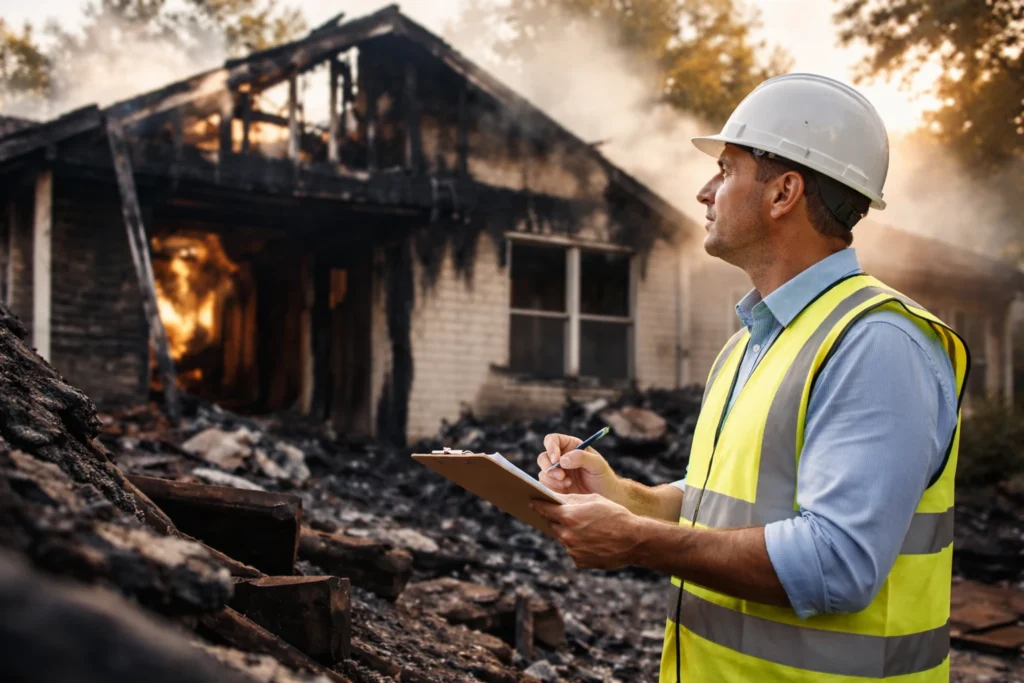
A fire changes everything. In minutes, your home, your routine, and your sense of stability can all be disrupted. And right when you need clarity the most, you’re suddenly dealing with paperwork, inspections, and decisions that carry serious financial weight. This is exactly where a fire insurance adjuster enters the picture and whether you understand their role or not can directly impact how much you recover.
I’ve seen it happen too often. Homeowners assume the process is straightforward. File a claim. Wait for the inspection. Accept the payout. Done. But that’s not how it plays out in reality. Fire claims are complex. They involve structural damage, smoke contamination, water intrusion from firefighting efforts, and detailed policy interpretation. Miss something, and you leave money on the table. Let’s break it all down clearly, step by step.
What Is a Fire Insurance Adjuster?
A fire insurance adjuster is the professional responsible for evaluating fire-related damage and determining how much the insurance company should pay on a claim. Sounds simple, but the type of adjuster matters a lot.
There are three main types:
- Insurance Company Adjuster
Works directly for your insurance company. Their job is to protect the insurer’s financial interests. - Independent Adjuster
Contracted by insurance companies during high-volume claims (like after major fires). Still represents the insurer. - Public Adjuster
Hired by you, the policyholder. Their job is to maximize your claim not minimize it.
Here’s the key takeaway: not all adjusters are on your side. And that difference can mean thousands sometimes tens of thousands of dollars.
How Fire Insurance Claims Actually Work
The process isn’t just one inspection and a check. It’s layered. And every step matters.
Typical Fire Claim Process
- Claim Filing
You notify your insurance company about the fire. - Initial Inspection
A fire insurance adjuster visits your property to assess visible damage. - Damage Documentation
Photos, measurements, and notes are taken. - Estimate Creation
The adjuster prepares a repair/replacement estimate. - Settlement Offer
The insurer presents a payout amount. - Negotiation (if any)
This is where many homeowners fall short they don’t negotiate.
Reality Check
Even small oversights in documentation can reduce your claim significantly. Smoke damage behind walls. Electrical system compromise. Lingering odor remediation. These are often underestimated or missed entirely.
The Real Role of a Fire Insurance Adjuster
A fire insurance adjuster does more than just “look around.” They are responsible for interpreting damageand interpretation is where things get subjective.
Here’s what they actually do:
- Inspect structural and cosmetic damage
- Evaluate smoke and soot impact
- Assess water damage from firefighting efforts
- Review your insurance policy coverage
- Estimate repair or replacement costs
- Recommend settlement amounts
But here’s the catch. Two adjusters can assess the same property and come up with very different numbers. Why? Because estimating damage is not an exact science.
Insurance Adjuster vs Public Adjuster: A Critical Difference
Let’s put this side by side.
| Factor | Insurance Adjuster | Public Adjuster |
| Who they work for | Insurance company | You (policyholder) |
| Goal | Minimize payout | Maximize payout |
| Damage evaluation | Often conservative | More comprehensive |
| Negotiation | Limited | Aggressive and detailed |
This isn’t about “good vs bad.” It’s about incentives. An insurance adjuster is trained to control costs. A public adjuster is trained to uncover every legitimate dollar owed to you. That difference becomes very real when you’re staring at a settlement offer that feels… low.
When Should You Hire a Fire Insurance Adjuster?
Timing matters. A lot.
You should strongly consider bringing in a public fire insurance adjuster if:
- The damage is extensive
- You feel overwhelmed or unsure
- Your claim is delayed
- The settlement offer seems too low
- There are disagreements about damage scope
Here’s my take: the earlier you involve a professional on your side, the better your outcome tends to be. Waiting until after accepting a low offer? That’s much harder to fix.
Signs Your Fire Claim Is Being Undervalued
Not every low offer is obvious. Some are quietly incomplete.
Watch for these red flags:
- Missing damage items
- Low repair costs
- Ignored smoke damage
- Heavy depreciation
- Pressure to settle quickly
If you notice even one of these, pause. Review everything carefully.
How a Public Adjuster Maximizes Your Fire Claim
A skilled public fire insurance adjuster doesn’t just review your claim they rebuild it properly.
What They Do Differently
- Conduct a detailed, room-by-room inspection
- Document every item lost or damaged
- Identify hidden damage (smoke, insulation, wiring)
- Use independent cost estimates
- Handle negotiations directly with the insurer
They also understand policy language. That matters more than most people realize.
Common Mistakes Homeowners Make After a Fire
Let’s keep this practical. These mistakes are common and costly.
- Accepting the first offer without review
- Failing to take photos before cleanup
- Throwing away damaged items too early
- Not tracking additional living expenses
- Trying to handle everything alone
What’s Actually Covered in a Fire Insurance Claim?
Covered Damages
- Structural damage
- Smoke and soot damage
- Water damage
- Personal belongings
- Additional living expenses
Quick Breakdown
| Category | Examples |
| Structure | Walls, roof |
| Contents | Furniture, electronics |
| Hidden Damage | HVAC contamination |
| Living Costs | Hotel, meals |
How to Choose the Right Fire Insurance Adjuster in Addison
What to Look For
- Licensed in Texas
- Fire claim experience
- Transparent fees
- Strong reputation
Questions to Ask
- How many fire claims have you handled?
- What’s your typical settlement increase?
What Does a Fire Insurance Adjuster Cost?
Public adjusters typically charge a percentage of the claim.
Example
- Initial offer: $50,000
- Adjusted claim: $85,000
- Fee (10%): $8,500
You still walk away with significantly more.
How Long Does a Fire Insurance Claim Take?
- Small claims: weeks
- Moderate: 1–3 months
- Large: several months
Factors include damage severity, documentation, and negotiation.
Why Addison Homeowners Turn to Public Adjusters
Local expertise means better estimates, faster responses, and stronger negotiations.
Understanding Hidden Damage Complexity
Fire damage isn’t always visible. Microscopic particles travel through air and settle deep into materials, a process that can be loosely compared to principles studied in Brownian motion, where tiny particles move unpredictably and spread beyond what the eye can see. This is why professional evaluation is critical surface inspections often miss serious underlying issues.
Final Thoughts: Don’t Leave Your Claim to Chance
A fire doesn’t just damage your home it creates a process that can either restore you properly or leave you underpaid. A knowledgeable fire insurance adjuster, especially one working on your side, can dramatically improve your outcome. Not by exaggerating but by making sure nothing is missed. Take your time. Ask questions. Get help if needed. Because once a claim is settled, it’s very hard to reopen. And you deserve to get every dollar you’re entitled to.
FAQs
A fire insurance adjuster evaluates fire-related damage, reviews your policy, and determines how much the insurance company should pay for your claim.
Not always insurance company adjusters work for the insurer, while public adjusters represent you and aim to maximize your payout.
You should consider hiring one immediately after a fire, especially if the damage is extensive or the claim process feels overwhelming.
Yes, a public adjuster often uncovers overlooked damages and negotiates more aggressively, which can lead to a higher settlement.
Public adjusters typically charge a percentage of the final settlement and usually require no upfront payment.
Claims usually cover structural damage, smoke and soot damage, water damage, personal belongings, and additional living expenses.
It can take anywhere from a few weeks to several months depending on the severity of the damage and how complex the claim is.
Red flags include missing damage items, low repair estimates, ignored smoke damage, and pressure to settle quickly.
No, you can review, question, and negotiate the offer many initial settlements are lower than what you may be entitled to.
Document everything with photos and videos, avoid discarding damaged items, and keep records of all expenses related to the loss.