
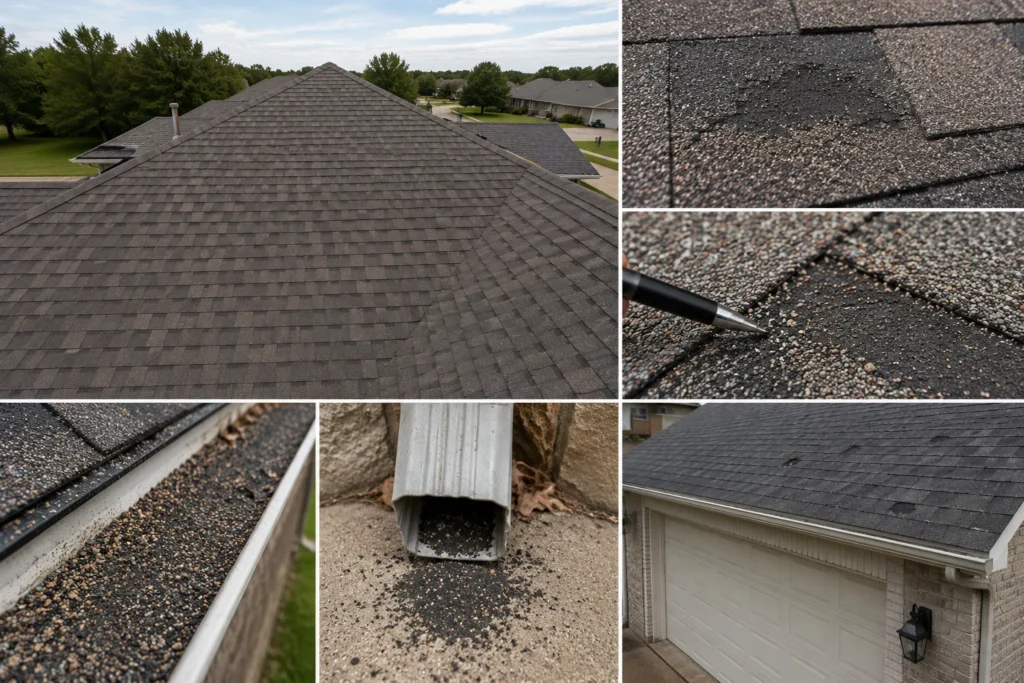
A roof does not need a visible hole to suffer serious damage. In fact, some of the most disputed roofing claims begin with something many homeowners barely notice at first—granule loss. This roof granule loss insurance claim guide explains what granule loss is, when insurance may cover it, how carriers evaluate these claims, and what steps homeowners can take to protect their interests when roof damage occurs.
Many property owners discover piles of dark, sand-like particles in their gutters after a storm and wonder whether they should be concerned. The answer is often yes. While some granule loss is completely normal, significant loss following a weather event can indicate damage that affects the roof’s ability to protect the home. The challenge is that insurance companies and homeowners frequently view granule loss differently. Understanding that difference can dramatically impact the outcome of a claim.
Understanding Roof Granules and Why They Matter
Most asphalt shingles contain a protective layer of mineral granules bonded to the surface. These granules serve several important purposes. Without them, shingles would deteriorate much faster under constant exposure to sunlight, rain, wind, and temperature fluctuations.
Granules help:
- Reflect ultraviolet radiation
- Protect asphalt from premature aging
- Improve fire resistance
- Enhance weather performance
- Extend roof lifespan
- Improve overall roof appearance
Think of granules as the roof’s first line of defense. When enough of them disappear, the underlying asphalt becomes vulnerable. Once that protective barrier is compromised, deterioration can accelerate surprisingly fast.
What Causes Roof Granule Loss?
Not all granule loss occurs for the same reason. This distinction becomes critically important during insurance claims because coverage often depends on the cause rather than the condition itself.
Normal Aging
Every roof experiences some granule shedding. Manufacturers actually expect it. New roofs often shed excess granules shortly after installation. Older roofs gradually lose granules as they approach the end of their useful life. Insurance policies generally do not cover normal wear and tear. This is one reason insurance carriers frequently investigate whether granule loss resulted from aging rather than a sudden weather event.
Hail Damage
Hail is one of the most common causes of insurance-related granule loss. When hailstones strike shingles, they can dislodge protective granules from the surface. The damage may not immediately create leaks. That is where confusion begins. Many homeowners assume a roof is fine because water is not entering the home. However, hail-damaged shingles can continue deteriorating long after the storm passes.
Wind Damage
Strong winds can contribute to granule loss in multiple ways. First, wind can directly stress roofing materials. Second, wind often carries debris that impacts shingles. Branches, airborne objects, and storm debris may remove granules during impact even when the shingle itself remains attached.
Foot Traffic
Roofs are not designed to be walked on constantly. Excessive foot traffic from contractors, inspectors, or maintenance personnel can loosen granules over time. This type of damage may become an issue during claim investigations if insurers determine the deterioration resulted from maintenance activities rather than covered perils.
Manufacturing Defects
In some cases, the problem originates during production. Poor granule adhesion can lead to premature shedding. When this occurs, warranty claims may become more relevant than insurance claims. Understanding the difference is essential because warranty coverage and insurance coverage operate under completely different rules.
How to Identify Roof Granule Loss
Many homeowners never climb onto their roofs. That is understandable. Fortunately, granule loss often leaves clues that can be observed from the ground.
Visible Roof Indicators
Look for:
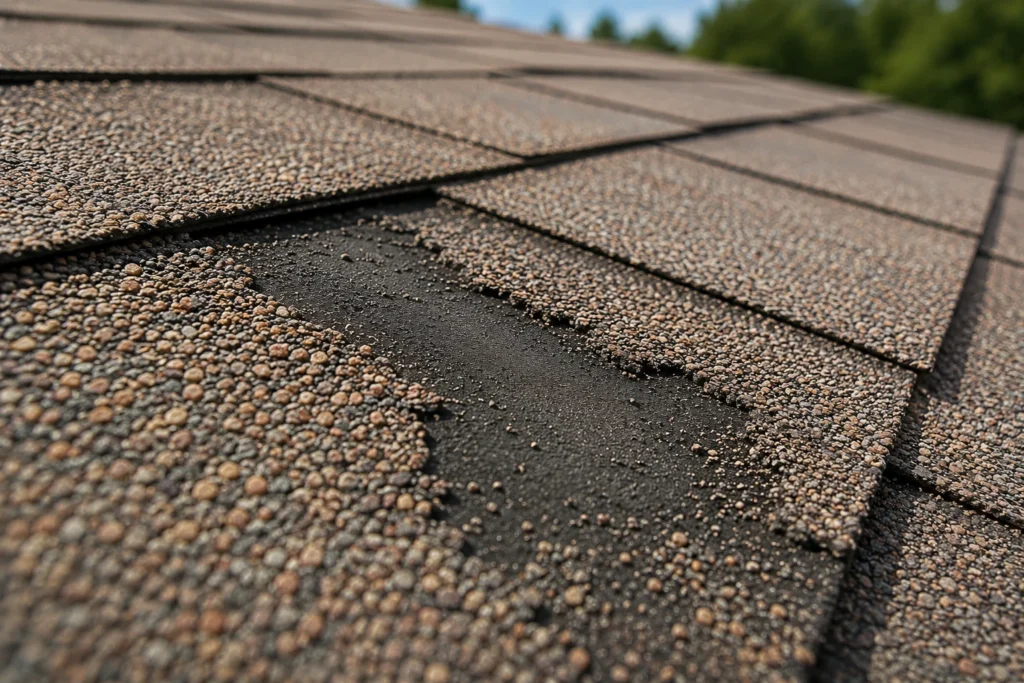
- Dark exposed asphalt spots
- Uneven shingle coloration
- Bald-looking sections
- Shiny exposed surfaces
- Inconsistent roof appearance
These visual changes may suggest granules have been removed from the shingle surface.
Gutter Evidence
One of the easiest places to identify granule loss is inside the gutter system.
After storms, inspect:
- Gutters
- Downspouts
- Splash blocks
- Drainage areas
A significant accumulation of granules may indicate roof deterioration or recent storm-related damage.
Professional Inspection Techniques
Professional inspectors often use:
| Inspection Method | Purpose |
| Physical Roof Inspection | Identify damaged shingles |
| Drone Photography | Document difficult areas |
| High-Resolution Imaging | Capture damage details |
| Moisture Evaluation | Detect hidden water intrusion |
| Detailed Reporting | Support insurance documentation |
The quality of documentation often determines whether a claim moves smoothly or becomes a prolonged dispute.
When Does Granule Loss Become a Serious Problem?
A few missing granules are rarely cause for panic. Substantial granule loss is a different story. The issue becomes serious when shingles begin losing their ability to protect the asphalt beneath.
Accelerated Aging
Without adequate granule coverage, ultraviolet rays directly attack asphalt materials.
This exposure can cause:
- Cracking
- Drying
- Brittleness
- Reduced flexibility
- Premature roof failure
What may appear to be a cosmetic issue today can become a costly roofing problem later.
Water Intrusion Risks
Granule loss alone does not automatically create leaks. However, it often contributes to future failures. As shingles weaken, their ability to repel water declines.
Eventually, moisture can penetrate vulnerable areas and affect:
- Underlayment
- Roof decking
- Insulation
- Drywall
- Interior finishes
Reduced Roof Life
A roof designed to last decades may experience a shortened lifespan when significant granule loss occurs. This reduction in service life often becomes one of the most important arguments during insurance claim discussions.
Does Homeowners Insurance Cover Granule Loss?

This is where things become complicated. The answer is not simply yes or no. Coverage depends heavily on what caused the granule loss.
Situations That May Be Covered
Insurance policies often provide coverage when granule loss results from a sudden and accidental event.
Examples may include:
- Hailstorms
- Windstorms
- Falling tree limbs
- Storm-driven debris impacts
When a covered peril causes damage, the resulting granule loss may become part of a valid insurance claim.
Situations Commonly Excluded
Many policies exclude damage resulting from:
- Wear and tear
- Aging
- Deterioration
- Improper maintenance
- Manufacturing issues
This distinction explains why insurers spend considerable effort determining whether damage is recent or simply part of the roof’s natural aging process.
Actual Cash Value Versus Replacement Cost
Policy type matters. A great deal. Some homeowners carry Actual Cash Value coverage. Others have Replacement Cost coverage. The difference can dramatically affect settlement amounts.
| Coverage Type | Typical Outcome |
| Actual Cash Value | Depreciation deducted |
| Replacement Cost | Eligible replacement costs reimbursed according to policy terms |
Many homeowners discover this difference only after filing a claim. That realization often comes too late.
Roof Granule Loss Insurance Claim Guide: What to Do Immediately After Discovering Damage
Timing matters. Insurance companies generally expect policyholders to report damage promptly. Delays can complicate investigations and create unnecessary disputes.
Step One: Photograph Everything
Start immediately.
Capture:
- Roof photos
- Gutter photos
- Granule accumulation
- Damaged shingles
- Property-wide storm effects
Take both close-up and wide-angle photographs. A complete visual story is far more persuasive than a few isolated images.
Step Two: Document the Date
Create a timeline.
Record:
- Storm dates
- Inspection dates
- Discovery dates
- Communication dates
Detailed timelines help establish when damage likely occurred.
Step Three: Preserve Evidence
Avoid cleaning gutters immediately if they contain large quantities of granules. Those materials may become useful evidence later. Photograph them first. Document the accumulation carefully.
Step Four: Review Local Weather Activity
Weather verification often becomes a crucial component of claim evaluation.
Research:
- Hail reports
- Wind reports
- Storm dates
- Severe weather alerts
Supporting weather documentation can strengthen a claim significantly.
Step Five: Obtain a Professional Inspection
Independent evaluations often reveal damage that homeowners overlook.
A detailed inspection report can identify:
- Functional damage
- Storm-related impacts
- Areas of concern
- Remaining roof life
- Recommended repairs
At this stage, many homeowners begin discovering the gap between visible damage and actual damage. That gap can be surprisingly large.
Evidence That Strengthens a Roof Granule Loss Claim
Insurance claims are built on evidence. The stronger the evidence, the stronger the claim. Many homeowners assume the adjuster will discover every issue independently. That assumption can be costly. While adjusters perform inspections, policyholders ultimately benefit from presenting organized documentation that clearly supports the claim.
Photographic Documentation
Photographs often become the foundation of a successful claim.
Effective photo documentation should include:
- Overall roof views
- Multiple roof slopes
- Close-up damage images
- Granules in gutters
- Downspout accumulation
- Property-wide storm damage
- Damaged exterior components
Take photographs from multiple angles. If possible, compare current photographs with older photos that show the roof before the storm event.
Professional Inspection Reports
Independent roofing inspections often provide valuable insight.
A detailed report may identify:
- Impact damage
- Granule displacement patterns
- Compromised shingles
- Roof age considerations
- Repairability concerns
The more specific the report, the more useful it becomes during claim evaluation.
Weather Data
Weather records frequently support causation. Insurance carriers often review:
| Evidence Type | Purpose |
| Hail Reports | Verify storm activity |
| Wind Reports | Confirm wind speeds |
| Weather Service Records | Establish event timing |
| Radar Data | Support storm path analysis |
| Storm Maps | Demonstrate exposure area |
When weather documentation aligns with roof damage, the claim narrative becomes significantly stronger.
Maintenance Records
Homeowners who maintain their roofs often place themselves in a better position during disputes.
Useful records may include:
- Prior inspections
- Roof maintenance invoices
- Contractor reports
- Repair receipts
- Installation records
These documents help demonstrate that the roof was properly maintained before the loss occurred.
Common Insurance Company Arguments Against Granule Loss Claims
Insurance carriers evaluate thousands of roof claims every year. As a result, certain arguments appear repeatedly. Understanding them helps homeowners prepare more effectively.
“This Is Normal Aging”
This is perhaps the most common position insurers take. The carrier may argue that granule loss developed gradually over time rather than resulting from a specific storm event.
When this occurs, supporting evidence becomes critical. Inspection reports, weather documentation, and damage patterns often help determine whether aging or storm activity caused the condition.
“The Damage Is Cosmetic”
Insurance companies sometimes classify granule loss as cosmetic rather than functional. This distinction can have significant financial consequences. Homeowners should understand that cosmetic and functional damage are not always easy to separate.
Granule loss may affect:
- UV protection
- Water shedding capabilities
- Shingle durability
- Overall roof lifespan
These factors frequently become part of claim negotiations.
“The Roof Was Already Near the End of Its Life”
Older roofs often receive additional scrutiny. Insurers may argue that age not the storm caused the observed condition. This is why pre-loss documentation can be extremely valuable. A roof can be older and still suffer legitimate storm damage. Age alone does not automatically eliminate coverage.
Partial Repair Recommendations
Some claims result in approval for limited repairs. This can create new concerns.
For example:
- Material matching issues
- Appearance differences
- Future repair complications
- Reduced property value concerns
A partial repair solution may not always restore the roof to its pre-loss condition.
How Insurance Adjusters Evaluate Granule Loss
Many homeowners wonder what adjusters actually look for during inspections. The answer is more detailed than most people realize.
Adjusters are generally attempting to determine three things:
- What happened?
- When did it happen?
- Is it covered?
Pattern Recognition
Storm damage often leaves recognizable patterns.
Adjusters evaluate:
- Impact distribution
- Directional damage
- Consistency across slopes
- Associated property damage
Random deterioration may appear different from concentrated storm impacts.
Test Areas
Many inspections involve examining specific sections of the roof.
These areas may reveal:
- Exposed asphalt
- Fractured shingles
- Impact marks
- Granule displacement
The adjuster uses these observations to support conclusions regarding causation.
Documentation Review
The inspection itself is only part of the process.
Adjusters frequently review:
- Photographs
- Contractor reports
- Weather records
- Policy provisions
- Claim history
Every piece of documentation contributes to the final coverage decision.
Mistakes Homeowners Make During Granule Loss Claims
Even valid claims can encounter problems when mistakes occur early in the process. Fortunately, most of these mistakes are avoidable.
Waiting Too Long
Time matters. Damage conditions change. Evidence disappears. Memories fade. Prompt reporting generally creates a stronger foundation for investigation.
Failing to Document Conditions
Some homeowners rely entirely on the insurance inspection. That approach can be risky. Independent documentation provides additional support and may identify issues that would otherwise go unnoticed.
Overlooking Interior Damage
Roof damage does not always stay on the roof.
Water intrusion may affect:
- Ceilings
- Walls
- Flooring
- Insulation
- Electrical systems
Failing to document interior effects can result in portions of the claim being overlooked.
Accepting Initial Conclusions Without Questions
Claim decisions deserve careful review. If a denial or partial approval does not make sense, homeowners should seek clarification and review supporting documentation. Questions are appropriate. Documentation is important. Verification matters.
The Role of a Public Adjuster in Roof Granule Loss Claims
Insurance policies are complex documents. Claim investigations can become complicated. For some homeowners, professional representation provides additional support during the process.
What Does a Public Adjuster Do?
A public adjuster works on behalf of the policyholder rather than the insurance company.
Services often include:
- Policy analysis
- Damage documentation
- Claim preparation
- Evidence organization
- Settlement negotiations
Their objective is to ensure all covered damages are properly identified and presented.
When Professional Assistance May Be Helpful
Not every claim requires outside representation. However, assistance may be valuable when:
- Claims are denied
- Payments appear insufficient
- Damage is extensive
- Causation is disputed
- Documentation is complex
Many policyholders seek help only after encountering obstacles. In some situations, earlier involvement can help prevent those obstacles from developing. Interestingly, some of the same principles discussed in articles about Fire Insurance Adjuster Secrets apply to roof claims as well. Thorough documentation, detailed policy review, and strategic presentation of evidence often influence claim outcomes far more than homeowners initially realize.
Why Independent Advocacy Matters
Insurance adjusters serve an important role. However, they ultimately represent the insurance company. A public adjuster represents the policyholder. That difference in perspective often changes how evidence is gathered, documented, and presented throughout the claims process.
Roof Granule Loss Claims in Addison
Weather patterns can play a significant role in roofing claims. Property owners in Addison are no strangers to severe weather events that bring hail, high winds, and heavy storms. These conditions can create roofing damage that is not always obvious from the ground.
Local Storm Exposure
North Texas experiences a variety of weather-related roofing threats.
These may include:
- Hailstorms
- Straight-line winds
- Wind-driven debris
- Heavy rain events
- Rapid temperature changes
Because of this exposure, roof inspections following major storms are often a prudent step for homeowners in Addison.
Why Local Documentation Matters
Regional weather data can become valuable evidence during claim evaluations. Storm reports, hail records, and local inspection findings often help establish the connection between weather events and roof damage. This information can be especially important when insurers question whether granule loss resulted from aging or storm activity.
Challenges Homeowners Commonly Face
Property owners in Addison frequently encounter concerns involving:
- Aging roofing systems
- Coverage disputes
- Matching issues
- Partial repair recommendations
- Storm-related deterioration
Understanding the claims process before problems arise can place homeowners in a stronger position when damage occurs.
Understanding the Bigger Picture Before Filing
A roof claim should never be approached casually. At the same time, homeowners should not assume that every instance of granule loss automatically falls outside insurance coverage. The key question is usually causation. What caused the granules to come off?
Aging? Weather? Impact damage? Installation issues?
The answer often determines whether a claim succeeds or fails.
Before filing, homeowners should focus on:
- Gathering evidence
- Documenting conditions
- Reviewing policy language
- Obtaining professional evaluations
- Preserving storm-related information
Taking these steps creates a stronger and more organized claim presentation.
Additional Resources for Homeowners
When researching roofing systems and weather-related deterioration, it can be helpful to understand broader scientific concepts that influence material performance. One interesting topic is Photodegradation, which explains how prolonged exposure to sunlight gradually breaks down materials over time. Understanding these processes can provide useful context when evaluating roof aging versus storm-related damage.
Conclusion
Roof granule loss is often dismissed as a minor roofing issue. Sometimes it is. Sometimes it is not. The difference frequently comes down to the cause, the severity of the damage, and the quality of the documentation supporting the claim.
This roof granule loss insurance claim guide highlights an important reality: successful claims are rarely built on assumptions. They are built on evidence. Homeowners who document damage thoroughly, preserve supporting information, understand their policy language, and obtain qualified inspections often place themselves in a stronger position throughout the claims process.
Whether the damage results from hail, wind, or another covered peril, acting quickly can make a significant difference. By understanding how insurers evaluate granule loss and preparing accordingly, property owners can approach the process with greater confidence and a clearer path toward a fair resolution.
FAQs
It may be covered if the granule loss results from a covered event such as hail or wind damage. Normal aging and wear are typically excluded.
Not necessarily. Minor granule loss can be normal, but significant loss may indicate damage that requires repair or replacement.
A professional roof inspection combined with weather records can help determine whether storm activity contributed to the damage.
Granules naturally shed over time, but excessive accumulation after a storm may indicate roof damage that should be evaluated.
Yes. Insurers may deny claims if they determine the damage resulted from age, deterioration, maintenance issues, or other excluded causes.
It is best to document the condition and obtain a professional inspection promptly so you can determine whether a covered loss may have occurred.
Roof age can influence how insurers evaluate the damage, but older roofs may still qualify for coverage if a covered peril caused the loss.
Photographs, inspection reports, maintenance records, and weather data are often among the most valuable forms of evidence.
Yes. Significant granule loss can expose the underlying asphalt to weather and UV damage, increasing the risk of future leaks.
A public adjuster may be helpful when a claim is denied, underpaid, or involves complex damage and coverage disputes.