When property damage turns your life upside down, the last thing you want is a confusing, slow-moving insurance claim standing between you and recovery. Yet that’s exactly what many homeowners and business owners face. This is where the question becomes urgent: what does a public adjuster do for you, really?
I’ll be direct. A public adjuster works for you, not the insurance company. Their job is to protect your financial interests, translate your policy into real dollars, and push your claim to a fair outcome—without you having to become an insurance expert overnight.
Let’s break it down. Clearly. Practically. Without fluff.
The Moment Things Go Wrong
A pipe bursts.
A storm rips through your roof.
A fire leaves smoke damage everywhere.
In that moment, most people assume the insurance company will simply “take care of it.” That belief doesn’t last long.
Claims are technical. Policies are dense. Timelines matter. And mistakes—especially early ones—can permanently reduce what you’re paid.
This is exactly why understanding what does a public adjuster do for you matters before you sign anything, say anything, or accept any settlement.
What a Public Adjuster Actually Is
A public adjuster is a licensed professional who represents policyholders during insurance claims. Not insurers. Not contractors. And not restoration companies.
You.
They work exclusively on your behalf to evaluate damage, interpret your policy, prepare documentation, and negotiate with the insurance company.
That distinction matters more than most people realize.
The Three Types of Adjusters (And Why Only One Works for You)
| Adjuster Type | Who They Work For | Their Priority |
| Insurance Company Adjuster | The insurer | Minimize payouts |
| Independent Adjuster | The insurer (outsourced) | Close claims efficiently |
| Public Adjuster | You | Maximize rightful recovery |
Insurance adjusters aren’t villains. But they are not neutral. Their job is to protect the insurer’s financial exposure.
A public adjuster’s job is to protect yours.
Interpreting Your Insurance Policy (So You Don’t Have To)
Insurance policies aren’t written for easy reading. They’re legal documents filled with exclusions, sub-limits, endorsements, and conditions that affect your payout.
One of the most valuable things a public adjuster does for you is interpret your policy line by line.
They identify:
- Coverage you didn’t know you had
- Limits that apply differently depending on cause of loss
- Time-sensitive requirements
- Policy language insurers often lean on to reduce claims
This step alone can change the outcome of a claim dramatically.
Evaluating the Full Scope of Damage
Insurance claims don’t fail because damage didn’t happen.
They fail because damage wasn’t documented properly.
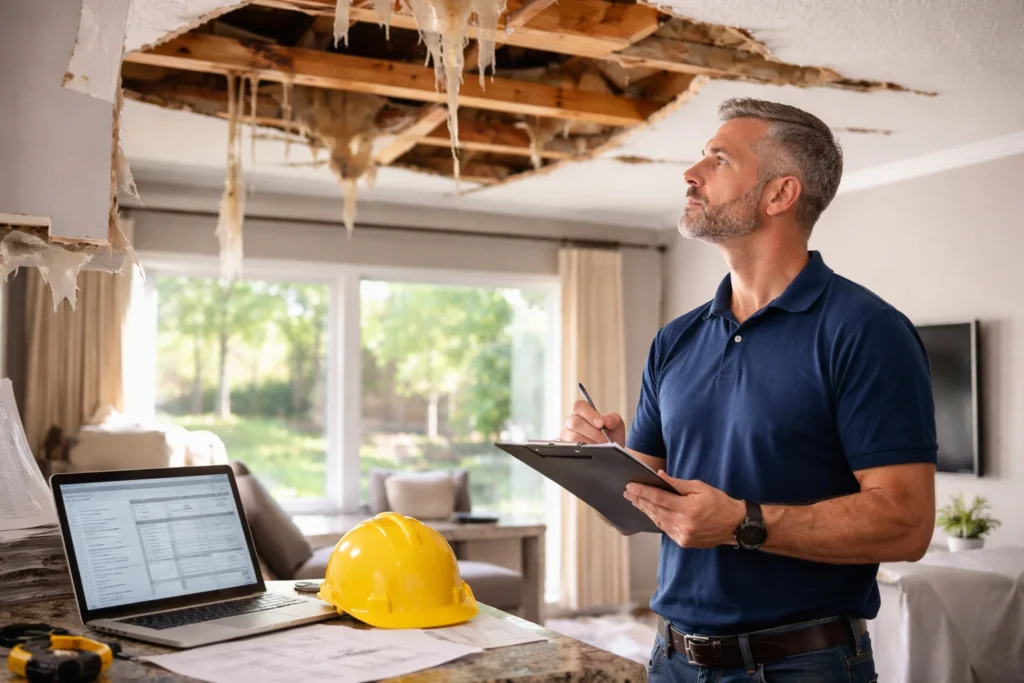
Public adjusters conduct detailed inspections that go beyond what most policyholders or insurance adjusters catch.
They look for:
- Hidden water intrusion
- Structural movement
- Electrical and mechanical damage
- Smoke contamination beyond visible soot
- Code upgrade requirements
Visible damage is only part of the story. Miss the rest, and it doesn’t get paid.
Turning Damage Into Real Numbers
Insurance companies don’t pay for “damage.”
They pay for documented, priced, and justified loss.
A public adjuster prepares:
- Itemized repair estimates
- Replacement cost valuations
- Depreciation challenges
- Supporting documentation insurers recognize
This isn’t guesswork. It’s structured. Precise. Defensible.
And it’s one of the clearest answers to what does a public adjuster do for you—they turn chaos into numbers that insurance companies must respond to.
Managing the Claim From Start to Finish
Claims fail slowly.
Missed calls. Missed deadlines. Misunderstandings.
Public adjusters manage the entire process so nothing slips.
That Includes:
- Filing the claim correctly
- Preparing and submitting documentation
- Attending inspections
- Handling insurer correspondence
- Responding to disputes
- Negotiating settlement offers
You’re not chasing adjusters.
You’re not deciphering emails.
And you’re not wondering what happens next.
That’s their job.
Negotiating When Offers Fall Short
Low offers are common. Especially early ones.
Insurance companies test resolve. They see who pushes back—and who doesn’t.
Public adjusters know:
- Which items are undervalued
- Which exclusions are being misapplied
- When a claim should be supplemented
- When to escalate
They negotiate based on documentation, not emotion. That’s why insurers take them seriously.
What a Public Adjuster Does That Homeowners Usually Can’t
Even smart, organized people struggle with claims. Not because they’re incapable—but because claims are demanding.
Here’s what public adjusters bring that most people can’t:
- Experience with insurer tactics
- Time to manage the process properly
- Emotional distance from the loss
- Technical estimating knowledge
- Leverage through persistence
This is especially important when stress and fatigue set in.
Types of Claims Public Adjusters Handle
Residential Claims
- Fire and smoke damage
- Water and plumbing failures
- Storm, hail, and wind losses
- Mold and long-term moisture issues
Commercial Claims
- Business interruption
- Inventory losses
- Tenant-landlord disputes
- Large-scale structural damage
No two claims are identical. But experienced public adjusters know the patterns.
When Hiring a Public Adjuster Makes Sense
Not every claim requires one. But many benefit from it.
Consider hiring a public adjuster if:
- The loss is significant
- The claim feels overwhelming
- You received a low or denied offer
- Repairs exceed initial estimates
- Time or energy is limited
If you’re unsure, a consultation can clarify your options without commitment.
How Public Adjusters Are Paid
Most public adjusters work on a contingency fee.
That means:
- No upfront cost
- No hourly billing
- They’re paid only if you’re paid
Fees are typically a percentage of the settlement, agreed upon before work begins.
This structure aligns incentives. If they don’t increase your recovery, they don’t get paid.
What Working With a Public Adjuster Looks Like
Here’s a simple breakdown:
- Initial consultation
- Policy and damage review
- Claim strategy development
- Documentation and submission
- Negotiation and resolution
You stay informed.
They handle the heavy lifting.
Why Local Knowledge Matters in Addison
Local experience isn’t a buzzword. It’s practical.
A public adjuster familiar with Addison understands:
- Regional weather patterns
- Local construction costs
- Area building code requirements
- Common insurer responses to North Texas claims
That knowledge directly affects accuracy and settlement strength.
Common Myths That Cost Policyholders Money
Let’s clear a few things up.
- “Public adjusters delay claims.”
Poor documentation delays claims. Strong claims move faster. - “Insurance companies don’t work with them.”
Insurers deal with public adjusters daily. - “They’re only for huge losses.”
Even mid-sized claims benefit from proper valuation. - “They’re too expensive.”
Underpaid claims cost far more.
How to Choose the Right Public Adjuster
Not all adjusters are equal.
Look for:
- Proper licensing
- Local experience
- Clear communication
- Transparent contracts
- Willingness to explain strategy
Avoid pressure tactics. A good public adjuster educates before they sell.
So, What Does a Public Adjuster Do for You—Really?
They level the playing field.
They protect your financial recovery.
And they turn policy language into action.
They negotiate when you shouldn’t have to.
Most importantly, they give you space to focus on rebuilding while someone else handles the fight.
That’s the real answer to what does a public adjuster do for you.
And when the stakes are high, having the right advocate can make all the difference.
FAQs
A public adjuster manages, documents, and negotiates your insurance claim to help you receive a fair settlement.
No. Public adjusters are hired by and legally represent the policyholder, not the insurer.
Hiring a public adjuster makes sense for large, complex, denied, or underpaid claims, or when the process feels overwhelming.
Yes. Public adjusters can often reopen or challenge denied claims if coverage was misapplied or documentation was insufficient.
Most work on a contingency fee, meaning they’re paid a percentage of the settlement only if you recover money.
No. Proper documentation and professional negotiation often streamline the process rather than slow it down.
They handle fire, water, storm, hail, mold, and other residential or commercial property damage claims.
Yes. You remain the decision-maker while the public adjuster handles the technical and administrative work.
In many cases, yes—by identifying overlooked damage, hidden coverage, and undervalued items.
Yes. Public adjusters must be licensed by the state and follow strict regulatory guidelines.